 Learn Quranic Arabic
| Key Takeaways |
| The Mushaf contains over ten distinct symbols that guide recitation, pronunciation, and proper pausing during Quranic reading. |
| The Waqf Lazim symbol (مـ) marks mandatory stops where continuing would distort the meaning of the verse entirely. |
| Symbols like (صلي) and (قلي) indicate preference — not obligation — giving reciters a choice between stopping and continuing. |
| The Iqlab symbol (م) above a nun signals a specific tajweed rule requiring the nun’s sound to shift toward a meem. |
| Understanding these symbols is essential for anyone learning to read the Quran accurately and with proper tajweed. |
When you open the Mushaf for the first time as a non-Arabic speaker, those small symbols scattered above and between the words can feel overwhelming. A tiny circle here, a triangle of dots there, a lone letter floating above a word — and nobody told you what any of it means.
These Quranic symbols are a precision system developed by early Muslim scholars to protect the exact recitation of the Quran. Each symbol carries a specific instruction. Once you know them, your reading transforms from uncertain to deliberate — and that shift is exactly what learning to read Quranic Arabic is built upon.
1. (مـ) — The Waqf Lazim Symbol Marks a Mandatory Stop
The Waqf Lazim symbol (مـ), which stands for “لازم” (obligatory), indicates that stopping here is required. Continuing past this point without pausing would alter the meaning of the verse in a way that could be misleading or even incorrect.
The meem in this symbol stands for Lazim — meaning the stop is not optional. Scholars placed this mark precisely at points where the syntactic or semantic relationship between the preceding and following phrase is completely independent.
Example from the Quran:

“Only those who hear will respond. But the dead — Allah will resurrect them.” (Al-An’am 6:36)
If a reader continues without stopping at (مـ), the verse appears to say that the dead will respond — which contradicts the intended meaning entirely.
At The Quranic Arabic Academy, our Quranic Arabic Grammar Course teaches students not just to recognize these symbols visually, but to understand why a stop is required — grounding recitation in genuine comprehension rather than mechanical habit.
Your First class is free. Join our Quranic Arabic Grammar Course now

2. (لا) — The Forbidden Stop Symbol Means Neither Stop Nor Restart
The symbol (لا) — from “لا تقف” (do not stop) — carries a double instruction: do not stop here, and do not begin a new reading from this point either. It appears at places where pausing would create a false grammatical or semantic break.
This is one of the most misunderstood symbols among beginners. Many students assume (لا) simply means “don’t stop,” but the restriction on beginning from that point is equally important. Starting after a (لا) marker mid-phrase strips the sentence of essential context.
Example:
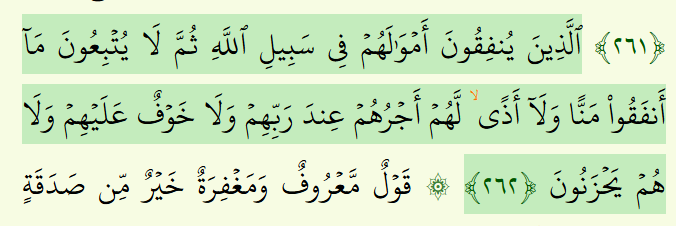
“Then they do not follow what they spent with reminders of it or injury — for them is their reward with their Lord.” (Al-Baqarah 2:262)
The (لا) here prevents a reader from isolating “لَهُمْ أَجْرُهُمْ” as a standalone phrase, which would sever it from its grammatical antecedent.
3. (صلي) — The Wasl Awla Symbol Means Continuing Is Preferred
The symbol (صلي) — an abbreviation of “الوصل أولى” (connection is preferable) — signals that the reader should ideally continue without stopping, though stopping remains valid. This is a guidance marker, not a prohibition.
It typically appears where the grammatical connection between two phrases is strong, but a brief pause would not corrupt the meaning.
Example:
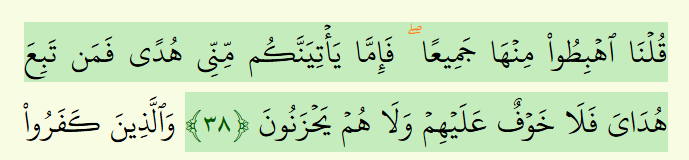
“We said: Go down from it, all of you. And when guidance comes to you from Me…” (Al-Baqarah 2:38)
The table below clarifies the three preference-based stop symbols at a glance:
| Symbol | Name | Meaning | Stop Allowed? |
| صلي | Wasl Awla | Continuing preferred | Yes, but not ideal |
| قلي | Waqf Awla | Stopping preferred | Yes, and recommended |
| ج | Jaiz | Equally permitted | Yes, full choice |
4. (قلي) — The Waqf Awla Symbol Means Stopping Is Preferred
The symbol (قلي) — from “الوقف أولى” (stopping is preferable) — is the mirror of (صلي). Here, pausing is the recommended choice, though a reader may continue if needed. It marks a point of natural semantic completion.
This symbol often appears where a topic or thought reaches a natural resting point before a new idea begins in the following phrase.
Example:
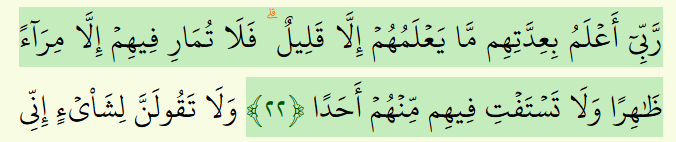
“None knows them except a few. So do not argue about them…” (Al-Kahf 18:22)
Students who understand Quranic Arabic grammar find these preference symbols become intuitive over time — because they reflect the natural rhythm of Arabic sentence structure.
Shots Videos from Our Courses
Ready to Begin Your Quranic Journey?
Start learning with professional instructors through our structured curriculum.
Book Your Free Trial5. (ج) — The Waqf Jaiz Symbol Allows a Free Choice
The Waqf Jaiz symbol (ج) — from “جائز” (permissible) — indicates that stopping or continuing are equally valid. There is no preference either way. The reader exercises personal discretion based on breath, phrasing, or recitation style.
This symbol appears where two adjacent phrases are both grammatically complete and semantically independent, making either choice acceptable without affecting meaning or correctness.
Example:
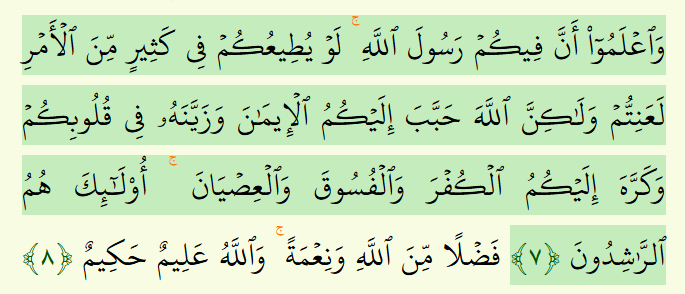
“And know that among you is the Messenger of Allah. If he were to obey you in much of the matter, you would be in difficulty.” (Al-Hujurat 49:7)
6. The Three Dots (Waqf al-Mu’ānaqah) Allow a Stop at Only One of Two Points
The Waqf al-Mu’ānaqah — represented by triangular clusters of three dots (∴ ∴) appearing at two places within a verse — indicates that the reader may stop at either marked location, but not both within the same recitation.
This symbol reflects a genuine semantic ambiguity in the verse: the text carries two valid readings depending on where the pause falls, each producing a distinct and legitimate meaning.
Example:

“That is the Book about which there is no doubt — a guidance for those conscious of Allah.” (Al-Baqarah 2:2)
Stopping after “لَا رَيْبَ” gives: “There is no doubt — it is guidance.” Stopping after “فِيهِ” gives: “There is no doubt in it — guidance for the righteous.”
Both readings are valid. The symbol preserves both without forcing a single interpretation.
Our instructors at The Quranic Arabic Academy find that this symbol genuinely surprises students — it reveals how intentional and linguistically precise the Mushaf’s annotation system truly is.
Meet our certified Quranic Arabic teachers

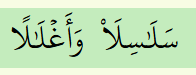
7. The Sukun with a Circle (ْ) Marks a Letter That Is Never Pronounced
A sukun sign with an open circle shape placed above a letter indicates that the letter is a written addition — present in the Rasm (written form) of the Mushaf — but is never pronounced under any recitation condition, whether stopping or continuing.
This reflects the classical orthographic conventions of the Quranic script, which preserves the historical written form of certain words even when pronunciation has been standardized differently.
Examples:
- وَثَمُودَاْ فَمَا أَبْقَى (An-Najm 53:51)
- سَلَاسِلَاْ وَأَغْلَالًا (Al-Insan 76:4)
- أُوْلَئِكَ — the waw is written but silent in all recitation
Ready to Begin Your Quranic Journey?
Start learning with professional instructors through our structured curriculum.
Book Your Free Trial8. The Tashil Dot Signals a Softened Hamza Pronunciation
The Tashil symbol (•) — a hollow or lightly filled dot placed between two hamzas — indicates that the second hamza is not pronounced with its full glottal stop. Instead, it is softened (sahhala), producing a sound between a hamza and an alif.
This is a recognized Tajweed rule for cases where two hamzas fall in sequence, particularly the Istifham (interrogative) hamza followed by a word beginning with hamza.
Example:
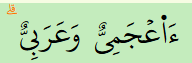
“Is it foreign and Arabic?” (Fussilat 41:44)
Without the Tashil dot, a reader unfamiliar with this rule might pronounce both hamzas with full force — which is incorrect in the recitation of Hafs ‘an ‘Asim, the most widely transmitted narration.
Our Students Reviews
Ready to Begin Your Quranic Journey?
Start learning with professional instructors through our structured curriculum.
Book Your Free Trial10. The Meem Symbol (م) Above a Letter Signals the Iqlab Rule
The small meem symbol (م) placed above a noon sakinah or tanwin indicates the presence of Iqlab — a Tajweed rule in which the noon sound transforms into a meem sound when followed by the letter baa (ب).
The word Iqlab (إقلاب) means “conversion” in Arabic grammar. The noon is not dropped — it is assimilated into a meem with a slight nasal prolongation (ghunnah).
Example:
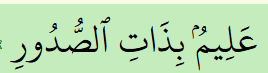
“All-Knowing of what is within the chests.”
The tanwin on “عَلِيمٌ” converts to a meem sound before “بِذَاتِ”, producing “Aleemum-bidhāti” in recitation.
In our experience teaching hundreds of students at The Quranic Arabic Academy, the Iqlab rule is frequently skipped by self-taught readers — because without recognizing this symbol, learners tend to pronounce a clean noon sound where none should exist. Our online Quranic Arabic classes for adults address this and all tajweed fundamentals directly, with certified instructors who have taught these rules for over 25 years.
Join our Quranic Arabic Courses for Advanced Learners with a Free Trial

Read Also: How to Create a Safe and Private Online Environment for Quranic Studies?
Start Learning to Read the Quran with Confidence at The Quranic Arabic Academy
These symbols are not obstacles — they are your guides. But recognizing them on a page and applying them fluently in recitation are two different skills, and the gap between them closes fastest with qualified instruction.
At The Quranic Arabic Academy, our certified instructors with 25+ years of experience teach you to read and understand the Quran with precision — through personalized 1-on-1 sessions, flexible 24/7 scheduling, and the proprietary Al-Menhaj curriculum designed exclusively for non-native speakers.
Book your free trial lesson today and read the Quran the way it was meant to be read.
Check out our top courses to start learning Quranic Arabic today:
- Quranic Arabic Grammar Course
- Arabic Courses for Understanding the Quran
- Quranic Arabic for Beginners
- Online Quranic Arabic Classes for Adults
- Quranic Arabic Course for Kids
- Quranic Arabic Course for Sisters
- Online Quranic Arabic Courses for Advanced Learners
Your first class is completely free. Start Learning Quranic Arabic courses Today.

Conclusion
Every symbol in the Mushaf was placed there by scholars who spent their lives in service of the Quran’s preservation. Learning what each mark means is not a technical exercise — it is an act of respect for that tradition.
When you stop at a (مـ) because you understand why it is there, or soften a hamza at the Tashil dot because you know the rule it signals, your recitation becomes intentional. That intentionality is what separates reading at the Quran from reading with it.
The Mushaf is the most carefully annotated text in human history. Alhamdulillah — every tool you need to read it correctly is already on the page.
Ready to Begin Your Quranic Journey?
Start learning with professional instructors through our structured curriculum.
Book Your Free TrialRead Also: Quranic Root Words
Frequently Asked Questions About Quranic Symbols
Why Do Some Mushafs Not Include All These Symbols?
Different printed editions of the Quran use varying annotation systems. The symbols described here reflect the Indo-Pak and Uthmani Mushaf standards commonly used in academic and recitation contexts. Some simplified editions omit preference markers like (صلي) and (قلي) to reduce visual complexity for beginning readers.
Is It Sinful to Stop at a (لا) Symbol?
Stopping at a (لا) symbol is not sinful, but it is considered an error in recitation etiquette (Adab al-Tilawah). If a reader must stop there due to breath constraints, scholars recommend restarting from a few words before the (لا) marker to restore the grammatical and semantic context.
How Do Quranic Symbols Relate to Tajweed Rules?
Several Quranic symbols directly encode Tajweed instructions — the Iqlab (م), the Tashil dot (•), and the silence markers all correspond to specific articulation rules. Other symbols govern pausing and continuation, which also fall under Tajweed. Understanding what Quranic Arabic is helps students see how these systems work together.
Do I Need to Memorize All These Symbols Before I Start Reading?
No — and attempting to memorize them all before beginning will delay your progress unnecessarily. In practice, the most important symbols to internalize first are the mandatory stop (مـ), the forbidden stop (لا), and the standard sukun (ْ). The remaining symbols become intuitive with guided recitation practice. Our Quranic Arabic course for beginners introduces symbols progressively, so you never feel overwhelmed.
Related Articles
Learn Quranic Arabic







Leave a Reply