 Quran
Quran
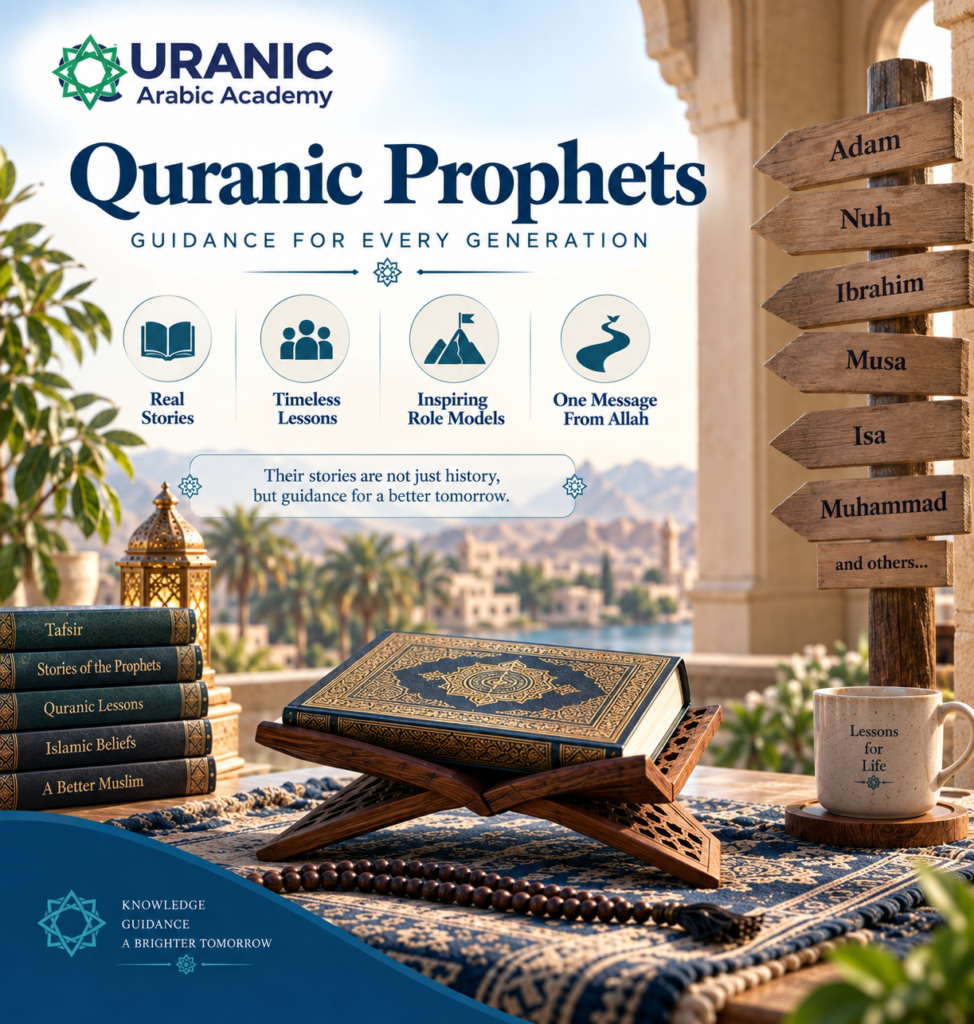
Quranic prophets are the messengers and prophets whose names and stories Allah has revealed directly in the Quran.
From Adam, the first human being, to Prophet Muhammad (peace and blessings be upon him), the final Messenger, the Quran presents them as models of patience, sincerity, and complete submission to Allah.
Understanding the Quranic prophets is one of the six pillars of faith in Islam. Muslims are required to believe in all of them without discrimination between them, even though only twenty-five are mentioned by name in the Quran.
What You Will Learn
- How many prophets are named in the Quran and where their names appear.
- The difference between a prophet (nabi) and a messenger (rasul) in Islam.
- The verified Quranic verses that list the prophets, in Arabic and English.
- Key lessons drawn from the stories of the prophets.
- Where to study these Quranic accounts in Arabic with structured guidance.
Who Are the Prophets Mentioned in the Quran?
The Quranic prophets are the individuals chosen by Allah and mentioned by name in the Quran to guide humanity toward the worship of the One God.
Allah states that He sent a warner to every nation throughout history, though only some of these prophets are named in the Quran.
وَلَقَدْ بَعَثْنَا فِى كُلِّ أُمَّةٍ رَّسُولًا أَنِ ٱعْبُدُوا۟ ٱللَّهَ وَٱجْتَنِبُوا۟ ٱلطَّـٰغُوتَ
“And We certainly sent into every nation a messenger, [saying], “Worship Allah and avoid false gods.””
This verse establishes a core Islamic belief: every community in history received guidance through a prophet, even though the Quran names only twenty-five of them directly.
What Is the Difference Between a Prophet and a Messenger?
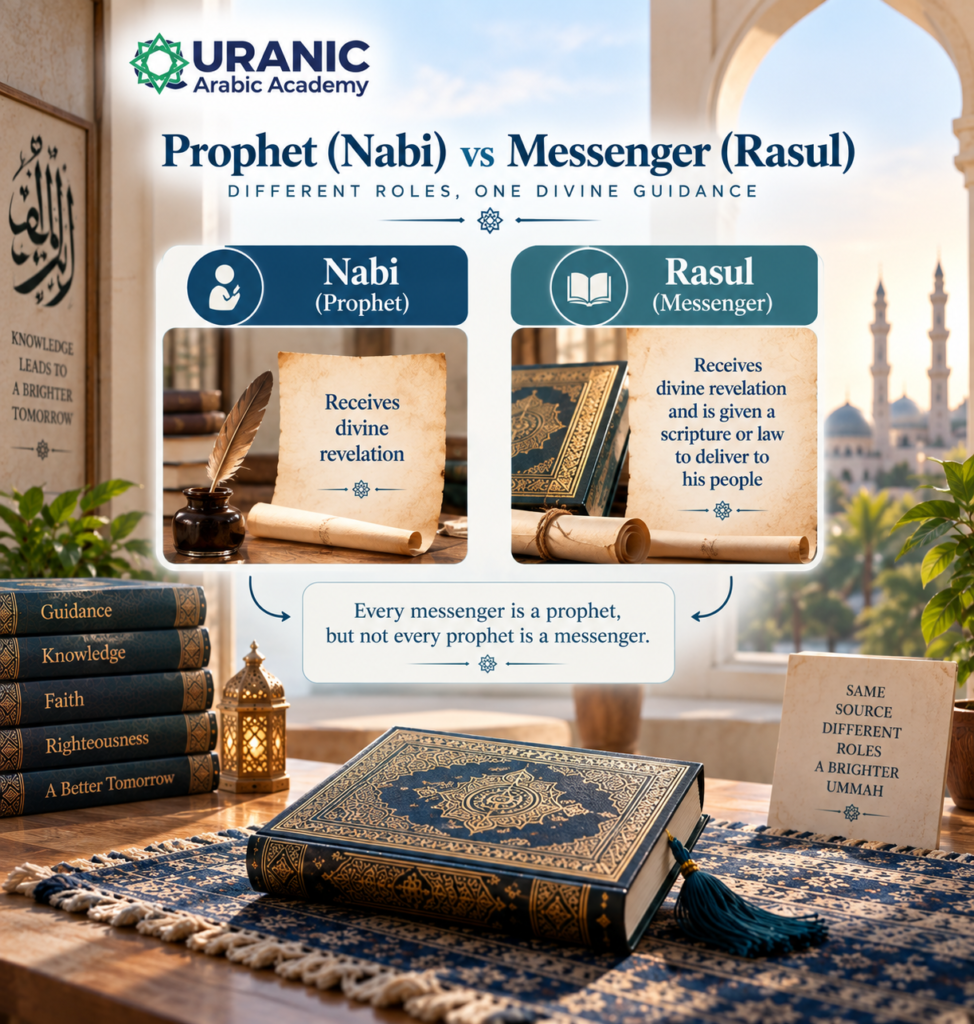
A nabi (prophet) is someone who receives divine revelation, while a rasul (messenger) is a prophet who is additionally given a scripture or law to deliver to his people. Every messenger is therefore a prophet, but not every prophet is a messenger.
| Term | Meaning |
| Nabi (Prophet) | Receives revelation from Allah, may or may not bring a new scripture or law. |
| Rasul (Messenger) | A prophet sent with a new scripture or law for his people, such as Musa, Isa, and Muhammad (peace and blessings be upon him). |
See It in Action:
Wondering what our interactive sessions look like? Click below to peek inside a live session and watch how our expert instructors make learning Quranic Arabic accessible and engaging.
Ready to Begin Your Quranic Journey?
Start learning with professional instructors through our structured curriculum.
Book Your Free TrialHow Many Prophets Are Mentioned in the Quran?
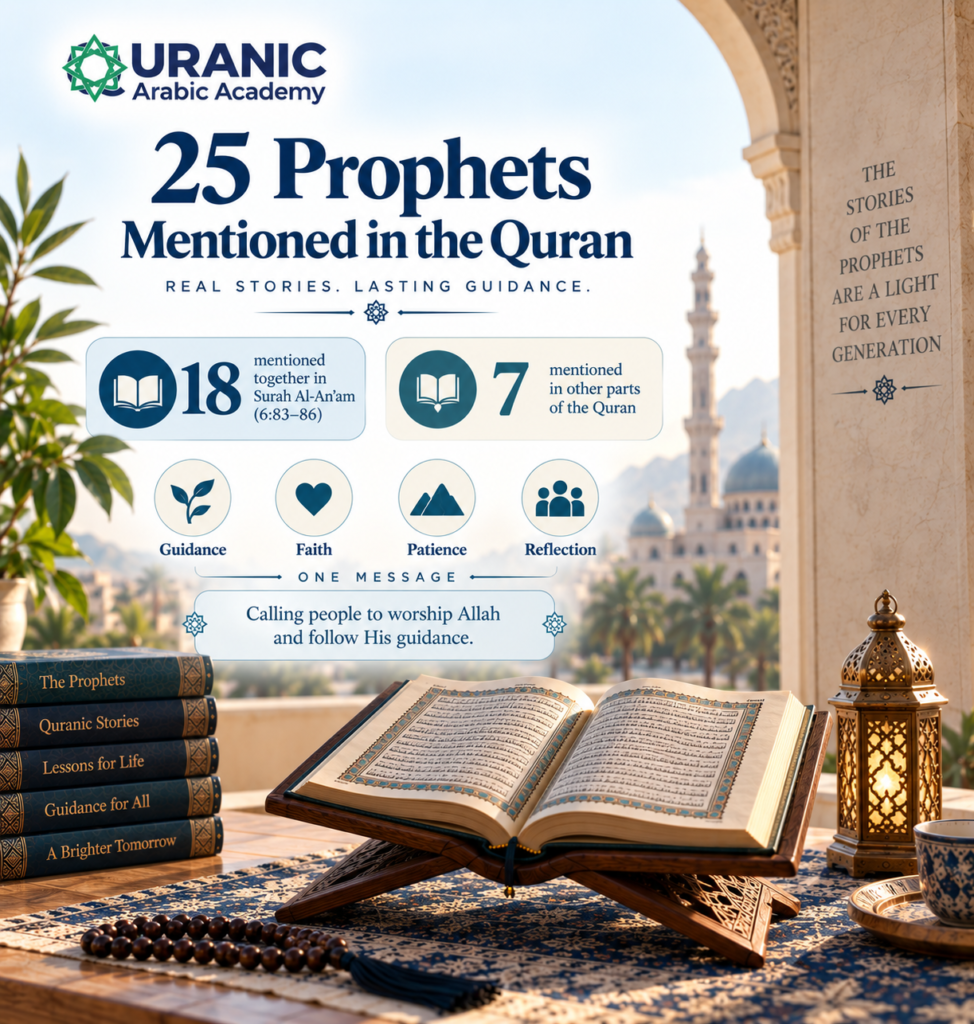
The Quran mentions 25 prophets by name, presenting their stories and teachings as sources of guidance, faith, patience, and reflection. Eighteen of these prophets are mentioned together in Surah Al-An’am, while the remaining seven are named in other parts of the Quran.
Their accounts vary in length and detail, but together they emphasize the shared message of the prophets: calling people to worship Allah and follow His guidance.
وَتِلْكَ حُجَّتُنَآ ءَاتَيْنَـٰهَآ إِبْرَٰهِيمَ عَلَىٰ قَوْمِهِۦ ۚ نَرْفَعُ دَرَجَـٰتٍ مَّن نَّشَآءُ ۗ إِنَّ رَبَّكَ حَكِيمٌ عَلِيمٌ * وَوَهَبْنَا لَهُۥٓ إِسْحَـٰقَ وَيَعْقُوبَ ۚ كُلًّا هَدَيْنَا ۚ وَنُوحًا هَدَيْنَا مِن قَبْلُ ۖ وَمِن ذُرِّيَّتِهِۦ دَاوُۥدَ وَسُلَيْمَـٰنَ وَأَيُّوبَ وَيُوسُفَ وَمُوسَىٰ وَهَـٰرُونَ ۚ وَكَذَٰلِكَ نَجْزِى ٱلْمُحْسِنِينَ * وَزَكَرِيَّا وَيَحْيَىٰ وَعِيسَىٰ وَإِلْيَاسَ ۖ كُلٌّ مِّنَ ٱلصَّـٰلِحِينَ * وَإِسْمَـٰعِيلَ وَٱلْيَسَعَ وَيُونُسَ وَلُوطًا ۚ وَكُلًّا فَضَّلْنَا عَلَى ٱلْعَـٰلَمِينَ
“And that is Our argument which We gave Abraham against his people. We raise up in degrees whom We will. Indeed, your Lord is Wise and Knowing. And We gave to him Isaac and Jacob – all [of them] We guided. And Noah, We guided before; and among his descendants, David and Solomon and Job and Joseph and Moses and Aaron. Thus do We reward the doers of good. And Zechariah and John and Jesus and Elias – and all were of the righteous. And Ishmael and Elisha and Jonah and Lot – and all [of them] We preferred over the worlds.”
Complete List of The 25 Prophets Named in the Quran
The table below lists all twenty-five prophets named in the Quran, along with their transliterated names and a brief note on each. Reading their stories in the original Arabic reveals details of language and meaning that translations alone cannot fully capture.
| Prophet | Note |
| Adam (آدم) | The first human being and the first prophet. |
| Idris (إدريس) | Mentioned in Surah Maryam as truthful and elevated. |
| Nuh / Noah (نوح) | Sent to call his people away from idolatry; builder of the Ark. |
| Hud (هود) | Sent to the people of ‘Ad. |
| Salih (صالح) | Sent to the people of Thamud. |
| Ibrahim / Abraham (إبراهيم) | Known as Khalilullah, father of prophets, builder of the Ka’bah. |
| Lut / Lot (لوط) | Sent to warn his people against grave sin. |
| Ismail / Ishmael (إسماعيل) | Son of Ibrahim, described as true to his promise. |
| Ishaq / Isaac (إسحاق) | Son of Ibrahim, father of Ya’qub. |
| Ya’qub / Jacob (يعقوب) | Also called Israel; father of the twelve tribes. |
| Yusuf / Joseph (يوسف) | His story is told in full in Surah Yusuf. |
| Ayyub / Job (أيوب) | Known for his patience through severe trial. |
| Shu’ayb (شعيب) | Sent to the people of Madyan. |
| Musa / Moses (موسى) | Spoken to directly by Allah; given the Torah. |
| Harun / Aaron (هارون) | Brother and helper of Musa. |
| Dhul-Kifl (ذو الكفل) | Described in the Quran as patient and righteous. |
| Dawud / David (داود) | Given the Zabur (Psalms); noted for his beautiful voice. |
| Sulayman / Solomon (سليمان) | Given command over jinn, wind, and animals. |
| Ilyas / Elijah (إلياس) | Called his people back to the worship of Allah alone. |
| Al-Yasa’ / Elisha (اليسع) | Mentioned briefly among the righteous. |
| Yunus / Jonah (يونس) | Known for his time inside the whale and his repentance. |
| Zakariya / Zechariah (زكريا) | Father of Yahya; prayed for a righteous child in old age. |
| Yahya / John (يحيى) | Given wisdom while still a child. |
| Isa / Jesus (عيسى) | Born miraculously to Maryam; given the Injil. |
| Muhammad (peace and blessings be upon him) (محمد) | The final Messenger, sent to all of humanity. |
Many students strengthen their understanding of these stories by studying the Quranic Arabic Academy’s beginner classes, which are designed to help new learners read and understand the Quran directly in Arabic.
Prophet Muhammad ﷺ as the Final Messenger
Prophet Muhammad ﷺ holds a unique position among the prophets mentioned in the Quran. He is described as the Messenger of Allah and the Seal of the Prophets, marking the completion of the prophetic mission.
His message confirmed the essential truths taught by earlier prophets, particularly the worship of Allah alone, while the Quran revealed to him became the final divine scripture and guidance for humanity.
Unlike prophets whose missions were directed to particular peoples, Prophet Muhammad ﷺ was sent with a universal message addressed to people everywhere.
مَّا كَانَ مُحَمَّدٌ أَبَآ أَحَدٍ مِّن رِّجَالِكُمْ وَلَـٰكِن رَّسُولَ ٱللَّهِ وَخَاتَمَ ٱلنَّبِيِّـۧنَ ۗ وَكَانَ ٱللَّهُ بِكُلِّ شَىْءٍ عَلِيمًا
“Muhammad is not the father of [any] one of your men, but [he is] the Messenger of Allah and last of the prophets. And ever is Allah, of all things, Knowing.”
This verse is the primary Quranic basis for the belief that no prophet will come after Muhammad (peace and blessings be upon him), a position held by the overwhelming majority of Muslim scholars across history.
Why Muslims Believe in All Prophets and Messengers
Belief in all the prophets and messengers sent by Allah is a fundamental part of Islamic faith. Muslims accept every prophet whose prophethood is established in revelation and do not reject some while accepting others.
Although the Quran indicates that Allah granted certain prophets particular distinctions and ranks, all of them are honored as truthful messengers who called people to worship Allah and follow His guidance.
Their essential message was therefore one in its foundation, even though particular laws and circumstances differed among their nations.
قُولُوٓا۟ ءَامَنَّا بِٱللَّهِ وَمَآ أُنزِلَ إِلَيْنَا وَمَآ أُنزِلَ إِلَىٰٓ إِبْرَٰهِـۧمَ وَإِسْمَـٰعِيلَ وَإِسْحَـٰقَ وَيَعْقُوبَ وَٱلْأَسْبَاطِ وَمَآ أُوتِىَ مُوسَىٰ وَعِيسَىٰ وَمَآ أُوتِىَ ٱلنَّبِيُّونَ مِن رَّبِّهِمْ لَا نُفَرِّقُ بَيْنَ أَحَدٍ مِّنْهُمْ وَنَحْنُ لَهُۥ مُسْلِمُونَ
“Say, [O believers], “We have believed in Allah and what has been revealed to us and what has been revealed to Abraham and Ishmael and Isaac and Jacob and the Descendants, and what was given to Moses and Jesus and what was given to the prophets from their Lord. We make no distinction between any of them, and we are Muslims [in submission] to Him.””
A well-known hadith reinforces this same principle, describing the prophets as one spiritual family united by a single message despite their different times and communities.
قال رسول الله ﷺ: «الأنبياءُ إخوةٌ لِعَلّاتٍ، أمهاتُهم شتّى ودينُهم واحد».
“The prophets are paternal brothers; their mothers are different, but their religion is one.”
| Study the Stories of the Prophets in ArabicUnderstand the Quran’s language directly and connect more deeply with the stories of the prophets through guided, one-on-one lessons.Book Your Free Trial → |
Key Lessons from the Stories of the Prophets
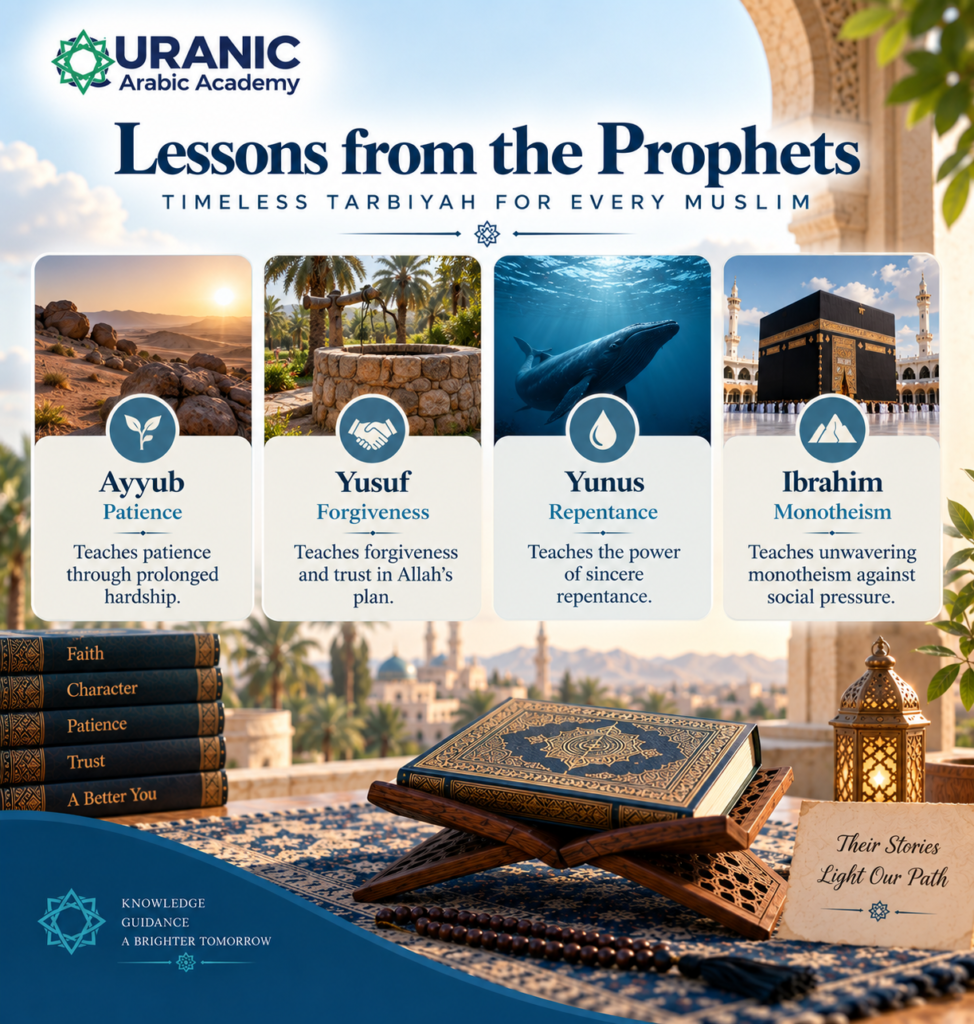
The Quran does not present the stories of the prophets merely as historical accounts. Each story carries important lessons in tarbiyah, helping believers develop faith, character, patience, and trust in Allah.
Through the experiences of the prophets, readers learn how to remain steadfast during hardship, respond to challenges with wisdom, rely upon Allah, and uphold truth even in difficult circumstances.
These stories therefore serve as practical guidance for spiritual and moral growth in everyday life.
- Ayyub’s story teaches patience through prolonged hardship.
- Yusuf’s story teaches forgiveness and trust in Allah’s plan.
- Yunus’s story teaches the power of sincere repentance.
- Ibrahim’s story teaches unwavering monotheism against social pressure.
Readers who want a deeper explanation of how the Quran builds character through these narratives can explore this article on Quranic tarbiyah from the Quranic Arabic Academy blog.
Understanding the Quran’s Commands Through the Prophets’ Stories
Many of the instructions and warnings given to the prophets in the Quran take the form of direct divine commands, known in Arabic as injunctions.
Recognizing this style of language helps readers understand why certain stories are phrased the way they are.
For a closer look at this topic, see this explanation of the meaning of Quranic injunctions on the Quranic Arabic Academy blog.

Why Studying the Prophets Matters for Muslims Today
Studying the Quranic prophets strengthens a Muslim’s connection to the wider chain of prophethood and clarifies the shared foundation of monotheism across all of Allah’s messengers. It also equips Muslims to explain their faith accurately to others.
Students from many backgrounds, including learners taking Quranic Arabic classes in Canada, join structured programs specifically to study these accounts directly from the Arabic text rather than relying only on translation.
Experience Our Teaching Style:
We believe in clarity and engagement. Watch these short highlights from our actual classes to see our teachers’ methodology and student interactions in real-time.
Ready to Begin Your Quranic Journey?
Start learning with professional instructors through our structured curriculum.
Book Your Free TrialLearn the Quran and Arabic with the Quranic Arabic Academy
If you would like to read and understand the stories of the prophets directly in Arabic, structured one-on-one classes can make this goal realistic, regardless of your current level.
Our Arabic Courses
- Quranic Arabic Classes
- Quranic Arabic Course for Beginners
- Online Quranic Arabic Courses for Advanced Learners
- Quranic Arabic Grammar Course
- Arabic Courses for Understanding the Quran
- Quranic Arabic Course for Sisters (Female)
- Quranic Arabic Course for Kids
- Online Quranic Arabic Classes for Adults
- Quranic Arabic Course UK
- Quranic Arabic Course London
- Quranic Arabic Course USA
- Quranic Arabic Course Canada
- Quranic Arabic Course Australia
- Quranic Arabic Course UAE
- Quranic Arabic Course Germany
| Deepen Your Understanding of the QuranJoin the Quranic Arabic Academy and learn to read, understand, and reflect on the Quran with qualified teachers.Book Your Free Trial → |
Conclusion
The Quranic prophets are twenty-five men named directly in the Quran, from Adam to Prophet Muhammad (peace and blessings be upon him), chosen by Allah to guide humanity toward His worship. Eighteen of them are listed together in Surah Al-An’am, while the rest appear across other chapters.
Muslims are required to believe in all of them without distinction, and their stories continue to offer practical lessons in patience, sincerity, repentance, and trust in Allah.
Studying these accounts directly in Arabic, such as through the courses offered by the Quranic Arabic Academy, allows readers to access these lessons in far greater depth.
Frequently Asked Questions
How many prophets are mentioned by name in the Quran?
Twenty-five prophets are mentioned by name in the Quran, from Adam to Prophet Muhammad (peace and blessings be upon him). Eighteen of them are listed together in Surah Al-An’am (6:83-86), and the remaining seven appear in other chapters.
Who is the first prophet mentioned in the Quran?
Adam is the first prophet mentioned in the Quran. He is described as the first human being created by Allah and the first to receive revelation and guidance.
Who is the last prophet mentioned in the Quran?
Prophet Muhammad (peace and blessings be upon him) is the last prophet named in the Quran. Surah Al-Ahzab (33:40) describes him as the final Messenger, after whom no further prophet will come.
What is the difference between a prophet and a messenger in Islam?
A prophet (nabi) receives revelation from Allah, while a messenger (rasul) is a prophet additionally sent with a new scripture or law. Every messenger is a prophet, but not every prophet is a messenger.
Are there more prophets than the twenty-five named in the Quran?
Yes. The Quran states that Allah sent a messenger to every nation, so scholars agree that many prophets existed beyond the twenty-five named directly in the Quran (Surah An-Nahl 16:36).





Leave a Reply