 Learn Quranic Arabic

Many Muslims recite the Quran daily yet feel a quiet ache — the words are familiar, but their meaning remains out of reach. That gap between recitation and comprehension is real, and it affects millions of non-Arabic speaking Muslims worldwide who long for a deeper connection.
Learning Arabic to understand the Quran is an achievable goal with the right structured approach. This guide answers the most common questions learners ask — from mastering the Arabic alphabet to understanding Quranic grammar — giving you a clear, practical roadmap forward.
How to Reach the Quran Understanding?
Reaching genuine Quran understanding requires more than memorizing vocabulary lists. It demands a layered approach: first building reading fluency, then acquiring core vocabulary, then studying grammatical structures that govern meaning in Quranic Arabic specifically.
The Quran uses Classical Arabic — a precise, rich linguistic system where a single grammatical ending can completely change a sentence’s meaning. Without understanding these mechanics, even a reader who knows individual words will misread full verses.
إِنَّا أَنزَلْنَاهُ قُرْآنًا عَرَبِيًّا لَّعَلَّكُمْ تَعْقِلُونَ
Inna anzalnahu Qur’anan ‘Arabiyyan la’allakum ta’qiloon
“Indeed, We have sent it down as an Arabic Qur’an that you might understand.” (Yusuf 12:2)
Allah explicitly connects the Arabic language of the Quran with the act of reasoning and understanding. This verse makes structured Arabic learning not just practical — it makes it spiritually purposeful.
At The Quranic Arabic Academy, the Arabic Courses for Understanding the Quran are designed precisely for this goal: building comprehension layer by layer, from foundational reading through grammatical analysis, guided by certified Arabic linguists.
Enroll in Our Quranic Arabic for Beginners with a Free Trial

The Three Layers of Quranic Arabic Comprehension
Understanding these three layers helps learners set realistic milestones and avoid the frustration of jumping stages too quickly.
| Layer | Focus Area | Outcome |
| Layer 1 | Arabic alphabet and reading fluency | Reading Quranic text accurately |
| Layer 2 | Core Quranic vocabulary (top 300 words) | Understanding large portions of Quranic text |
| Layer 3 | Nahw (syntax) and Sarf (morphology) | Analyzing full verse meanings independently |
Each layer builds directly on the previous one. Skipping Layer 1 makes Layer 3 nearly impossible to internalize meaningfully.
If I Learn Arabic Will I Understand the Quran?
Yes — but only if you learn the right type of Arabic. Modern Standard Arabic (MSA) and spoken dialects share vocabulary with Quranic Arabic but differ significantly in grammatical structure, word forms, and rhetorical style.
Quranic Arabic is Classical Arabic with specific characteristics: dual noun forms, broken plural patterns, and verb conjugations rarely used in contemporary speech. A student who studies only conversational Arabic will understand fragments of the Quran but miss precise theological meanings entirely.
How to Learn Arabic to Understand the Quran?
Learning Arabic to understand the Quran follows a clear sequence. Attempting these steps out of order is the most common reason learners plateau without achieving real comprehension.
Step 1: Master Arabic Alphabet Reading First
Before studying a single word of meaning, you must read Arabic text accurately and fluently. This includes recognizing all 29 letters in their four positional forms, understanding short vowel markers (harakat), and reading connected script smoothly.
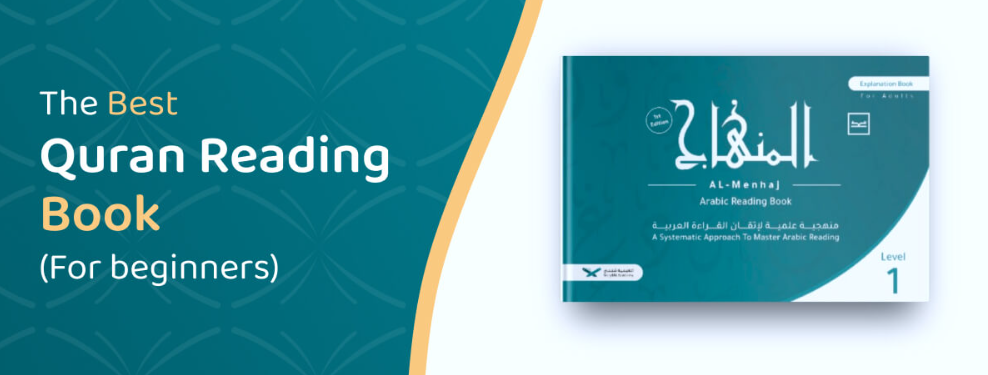
The Al-Menhaj Book at The Quranic Arabic Academy provides exactly this foundation. Authored by Luqman ElKasabany and developed over 25+ years of experience, Al-Menhaj is specifically designed for non-native English-speaking Muslims beginning their Arabic reading from zero.
Step 2: Build a Core Quranic Vocabulary Base
Approximately 300 root-based words account for large portions of all Quranic occurrences. Prioritizing these high-frequency words gives you immediate comprehension returns on your learning investment.
Focus on words from short Surahs you already recite in Salah. This connects your new vocabulary to familiar contexts, dramatically improving retention and immediate application.
Step 3: Study Quranic Grammar Systematically
Grammar is where real comprehension is built. Nahw (Arabic syntax) teaches you how words relate to each other in a sentence. Sarf (Arabic morphology) teaches you how words are formed and transformed from root patterns.
Step 4: Apply Grammar Directly to Quranic Text
The critical step most learners skip is applying grammatical rules immediately to actual Quranic verses — not to textbook exercises alone. When you analyze a verse grammatically, you see precisely how each word functions and why the meaning cannot be otherwise.
Take بِسْمِ اللَّهِ الرَّحْمَٰنِ الرَّحِيمِ (Bismillah ir-Rahman ir-Raheem)
as a starting point. The word بِسْمِ (Bismi) contains a preposition بِ (with/in) plus اسم (name) in the genitive case — showing grammatical relationship, not just vocabulary meaning.
Ready to Begin Your Quranic Journey?
Start learning with professional instructors through our structured curriculum.
Book Your Free TrialHow to Learn Arabic Grammar for the Quran?
Learning Arabic grammar for the Quran means focusing on Nahw and Sarf as they appear in Quranic text — not as abstract academic subjects. Every grammatical rule you learn should connect immediately to a Quranic example.
a. Understanding I’rab — The Quranic Case System
I’rab refers to the case endings that change based on a word’s grammatical function. There are three primary cases in Arabic, each serving a distinct purpose in a sentence.
| Case | Arabic Term | Function | Ending |
| Nominative | Marfu’ (مرفوع) | Subject of a sentence | Dammah (ـُ) |
| Accusative | Mansub (منصوب) | Object, adverb, predicate | Fathah (ـَ) |
| Genitive | Majrur (مجرور) | After preposition, in idafah | Kasrah (ـِ) |
A single word’s case ending tells you its role in the sentence. Missing these endings means missing the grammatical relationships that carry theological precision throughout Quranic text.
b. Learning Sarf — Arabic Word Formation Patterns
Arabic words are built from three-letter roots. From the root ك-ت-ب (K-T-B, relating to writing), dozens of words are formed: كَتَبَ (he wrote), كِتَاب (book), كَاتِب (writer), مَكْتُوب (written).
Recognizing root patterns allows you to decode unfamiliar Quranic words by identifying their root and applying the pattern. This is a core skill that distinguishes systematic learners from those who rely purely on translation.
Working with a certified Arabic linguist through The Quranic Arabic Academy accelerates root pattern recognition significantly. One-on-one sessions allow your instructor to correct your pattern analysis in real time — something no pre-recorded course can provide.
Working with qualified instructors through The Quranic Arabic Academy’s Quranic Arabic Grammar Course ensures you learn these systems correctly from the beginning, avoiding the deeply embedded grammatical errors that self-study often produces.
Your First class is free. Join our Quranic Arabic Grammar Course now
How to Learn the Arabic Alphabet of the Quran?
The Arabic alphabet used in the Quran consists of 28 letters, each appearing in up to four forms depending on its position within a word. Learning these forms correctly is the absolute first step — without it, no further progress in Arabic is possible.
a. Recognizing the Four Positional Letter Forms
Every Arabic letter changes shape depending on whether it appears at the beginning, middle, or end of a word, or in isolation. This is one of the first challenges non-native learners encounter, and mastering it requires focused, structured practice.
Read Also: Benefits of Reading the Quran Daily
b. Understanding Harakat — The Short Vowel System
Harakat (short vowel markers) are critical in Quranic text because they determine both pronunciation and grammatical function. The three primary harakat are Fathah (ـَ), Kasrah (ـِ), and Dammah (ـُ), with Sukun (ـْ) marking a vowel-less consonant.
Many learners underestimate harakat at the alphabet stage, viewing them as pronunciation aids only. In reality, harakat carry grammatical information — a word’s harakat tells you its case, its verb tense, and its relationship to surrounding words.
Read Also: How to Build a Daily Quran Routine
Ready to Begin Your Quranic Journey?
Start learning with professional instructors through our structured curriculum.
Book Your Free TrialRead Also: Rewards of Reading the Quran
Begin Your Arabic Learning for Quran Understanding with The Quranic Arabic Academy
Understanding the Quran in Arabic is within reach — with the right instructor and structured curriculum beside you.
The Quranic Arabic Academy offers:
- 1-on-1 personalized sessions with certified Arabic linguists and Quran teachers
- Flexible scheduling available 24/7 to fit any timezone or lifestyle
- Structured progression from Al-Menhaj alphabet reading through advanced Quranic grammar
- Courses for every learner: Sisters, Kids, Adults, Beginners, and Advanced students
- The Al-Menhaj Book — developed with 25+ years of teaching experience for non-native speakers
Book your free trial lesson today and take your first real step toward understanding the Quran as Allah revealed it — in clear, beautiful Arabic.
Check out our top courses to start learning Quranic Arabic today:
- Quranic Arabic Grammar Course
- Arabic Courses for Understanding the Quran
- Quranic Arabic for Beginners
- Online Quranic Arabic Classes for Adults
- Quranic Arabic Course for Kids
- Quranic Arabic Course for Sisters
- Online Quranic Arabic Courses for Advanced Learners
Your first class is completely free. Start Learning Quranic Arabic courses Today.

Conclusion
Learning Arabic for Quran comprehension works best when it follows a deliberate sequence — alphabet first, vocabulary second, grammar third, and applied analysis throughout. Skipping foundations creates gaps that compound over time and block real understanding.
Grammar is the core of Quranic comprehension, not an advanced topic to save for later. The I’rab case system and Sarf root patterns are tools that give you direct access to meaning — tools that structured, instructor-led study places in your hands from early lessons.
Alhamdulillah, every Muslim who commits to this path with proper guidance reaches a point where the Quran speaks to them directly. That connection — hearing a verse in prayer and understanding its meaning as the words reach you — is the true reward of learning Arabic for the Quran.
Related Articles
Learn Quranic Arabic


Leave a Reply