 Learn Quranic Arabic
Millions of Muslims recite the Quran daily yet feel a deep disconnection from its meaning. That gap, between the words on the page and the understanding in the heart, is one of the most common struggles non-Arabic speakers describe. Learning Quranic Arabic transforms that experience entirely.
Understanding how to learn Quranic Arabic means following a structured, linguistically informed path from Arabic script fundamentals to grammatical analysis of Quranic verses. This guide maps every essential step so you can build real comprehension, not just surface-level recognition.
1. Master Arabic Script and Pronunciation
Mastering Arabic script and pronunciation is the first step every serious Quranic Arabic student must complete before anything else. Without this foundation, reading the Quran remains guesswork.
Arabic has 28 letters, each with up to four positional forms: initial, medial, final, and isolated. Non-Arabic speakers frequently underestimate this, rushing past letter recognition into vocabulary, which creates compounding errors later.
Understanding Makharij al-Huruf for Accurate Quranic Recitation
The Arabic phonetic system includes sounds absent in most European languages. Letters like ع (Ayn), ح (Ha), and خ (Kha) must be articulated from their correct points of articulation, known as Makharij al-Huruf.
Mispronouncing these letters changes word meanings in the Quran. Confusing ح and ه in certain Quranic words produces entirely different readings. Correct pronunciation is therefore not cosmetic; it is exegetically essential.
At The Quranic Arabic Academy, our Quranic Arabic Grammar Course builds directly on this kind of vocabulary foundation, helping students apply words within grammatical structures.
Your First class is free. Join our Quranic Arabic Grammar Course now
The table below summarizes the core Arabic vowel signs (Tashkeel) every Quran reader must know before progressing further.
| Vowel Sign | Arabic Name | Pronunciation | Example | Sound Produced |
| ◌َ | Fatha | Short ‘a’ | بَ (Ba) | ‘ba’ as in ‘bat’ |
| ◌ِ | Kasra | Short ‘i’ | بِ (Bi) | ‘bi’ as in ‘bit’ |
| ◌ُ | Damma | Short ‘u’ | بُ (Bu) | ‘bu’ as in ‘book’ |
| ◌ً | Tanwin Fath | ‘-an’ sound | كتاباً | ends with ‘an’ |
| ◌ْ | Sukun | No vowel | بْ | consonant stop |
| ◌ّ | Shadda | Doubled consonant | رَبّ | emphasized double |
2. Learn Quranic Arabic Vocabulary Through High-Frequency Root Words
Building Quranic vocabulary through high-frequency words is the most efficient entry point into understanding the Quran directly. Around 70% of the Quran is comprised of roughly 300 root words in various forms.
Classical Arabic is a root-based language. Most Quranic words derive from three-letter roots (الجذر — al-Jidhr) that carry a core semantic field. Learning the root ك-ت-ب, for example, opens words like كَتَبَ (he wrote), كِتَابٌ (book), كَاتِبٌ (writer), and مَكْتُوبٌ (written).
Applying the 80/20 Principle to Quranic Vocabulary Study
Frequency-based vocabulary learning accelerates Quran comprehension dramatically. The word الله appears over 2,600 times. The word رَبّ (Lord/Rabb) appears over 900 times. Mastering these core words first gives you immediate access to large portions of the Quran.
Consider the word رَحْمَة (Rahma — mercy). Its root ر-ح-م generates رَحِيمٌ (Most Merciful), رَحْمَنٌ (Most Gracious), and أَرْحَامٌ (wombs). When you encounter any of these in the Quran, you immediately access their semantic connection.
Allah says in Surah Yusuf:
إِنَّا أَنزَلْنَاهُ قُرْآنًا عَرَبِيًّا لَّعَلَّكُمْ تَعْقِلُونَ
Inna anzalnāhu Qur’ānan ‘Arabiyyan la’allakum ta’qilūn
“Indeed, We have sent it down as an Arabic Qur’an that you might understand.“ (Yusuf 12:2)
This verse itself contains five high-frequency Quranic roots: أنزل (to send down), قرآن (Quran), عربي (Arabic), لعل (perhaps/so that), and عقل (to reason/understand). One verse, five roots, dozens of derivatives.
Ready to Begin Your Quranic Journey?
Start learning with professional instructors through our structured curriculum.
Book Your Free Trial3. Understand Quranic Arabic Grammar Through the Three Core Pillars
Understanding Quranic Arabic grammar requires focused study of three foundational pillars: Nahw (syntax), Sarf (morphology), and I’rab (grammatical case marking). These form the analytical backbone of understanding Quranic Arabic.
a. Nahw: How Arabic Sentence Structure Differs from English
Arabic is a highly inflected language, meaning grammatical relationships are expressed through case endings (حَرَكَات) on nouns and verbs, not primarily through word order. A noun in the nominative case (مَرْفُوع) carries a Damma (◌ُ), while an accusative noun (مَنْصُوب) carries a Fatha (◌َ).
In Surah Al-Fatiha, the word الرَّحِيمِ carries a Kasra ending (مَجْرُور) because it follows a preposition and is in the genitive case. Missing this case ending leads to misreading the grammatical structure of the verse entirely.
b. Sarf: Morphological Patterns That Unlock Quranic Word Families
Arabic morphology (Sarf) works through fixed patterns (أَوْزَان — Awzan) applied to three-letter roots. The pattern فَاعِلٌ (Fa’il) always produces an active participle meaning “the one who does X.”
The table below illustrates how one morphological pattern generates multiple Quranic words from different roots:
| Pattern (Wazn) | Root | Quranic Word | Meaning | Verse Reference |
| فَاعِلٌ (Fa’il) | ع-ل-م | عَالِمٌ | One who knows/Scholar | Al-Baqarah 2:29 |
| فَاعِلٌ (Fa’il) | ك-ف-ر | كَافِرٌ | One who disbelieves | Al-Baqarah 2:6 |
| فَاعِلٌ (Fa’il) | ص-ب-ر | صَابِرٌ | One who is patient | Al-Baqarah 2:153 |
| فَعِيلٌ (Fa’eel) | ر-ح-م | رَحِيمٌ | Most Merciful | Al-Fatiha 1:3 |
| فَعِيلٌ (Fa’eel) | ع-ز-ز | عَزِيزٌ | The Mighty | Al-Baqarah 2:129 |
| مَفْعُولٌ (Maf’ul) | ك-ت-ب | مَكْتُوبٌ | That which is written | Al-Isra 17:58 |
c. I’rab: Reading Grammatical Case Endings Directly in Quranic Text
I’rab is the practical application of Nahw rules to actual Quranic words — identifying each word’s grammatical case from its ending and understanding why it carries that ending. It is where syntax theory meets the Quranic page.
A student practicing I’rab on بِسْمِ اللَّهِ الرَّحْمَٰنِ الرَّحِيمِ immediately recognizes that اللَّهِ carries a Kasra because it is مَجْرُور — pulled into the genitive case by the preposition بِ. That single observation connects grammar to meaning in real time.
I’rab also protects students from dependence on translation. Once you read case endings fluently, you extract meaning directly from the Arabic structure rather than relying on an English rendering of the verse.
The Online Quranic Arabic Courses for Advanced Learners at The Quranic Arabic Academy support students at milestones 3 and 4 with in-depth grammatical analysis sessions focused on actual Quranic text rather than simplified textbook examples.
Join our Quranic Arabic Courses for Advanced Learners with a Free Trial

4. Choose a Structured Curriculum
Choosing the right structured curriculum is what separates students who reach real Quran comprehension from those who stagnate. General Modern Standard Arabic (MSA) courses are insufficient; Quranic Arabic has unique grammatical constructions and vocabulary absent in modern speech.
Why General Arabic Courses Are Insufficient for Quranic Comprehension
Quranic Arabic preserves Classical Arabic structures that have largely disappeared from spoken dialects. For Example the jussive mood appears frequently in Quranic conditional sentences. Students trained only in MSA often misidentify these as grammatical errors rather than recognizing them as classical constructions.
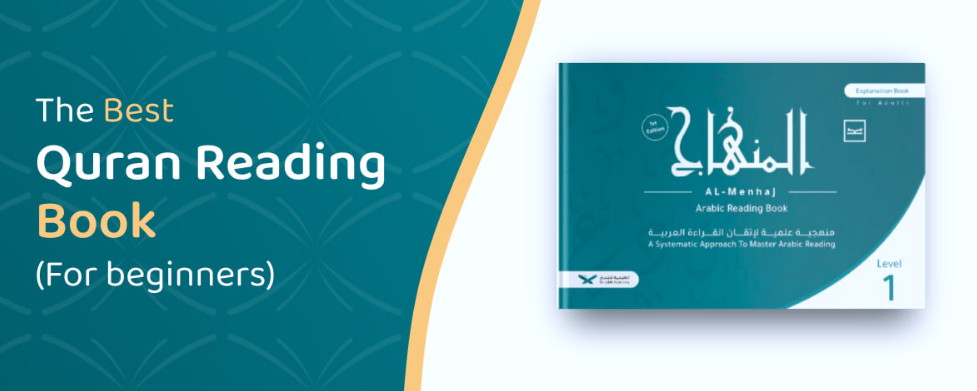
The Al-Menhaj Book Methodology for Reading Fundamentals
For students beginning at zero, the Al-Menhaj Book provides a systematic path through Arabic reading fundamentals before advancing into grammar. Authored by Luqman ElKasabany, it guides non-native speakers from the alphabet through connected reading in a logical, pedagogically sound sequence.
The book was created specifically for English-speaking Muslims, removing the Arabic-medium instruction barrier that causes many beginners to abandon their studies prematurely. It bridges foundational literacy and Quranic reading readiness.
Read Also: Benefits of Learning Quranic Arabic
5. Practicing Grammatical Analysis Directly on Quranic Verses Using I’rab
Practicing I’rab, the grammatical analysis of individual words in Quranic verses, is what distinguishes a student who understands the Quran from one who only memorizes translations. I’rab reveals why each word carries its specific ending.
A Step-by-Step I’rab Analysis of a Quranic Verse:
Allah says in Surah Al-Ikhlas1:
قُلْ هُوَ اللَّهُ أَحَدٌ
Qul Huwa Allahu Ahad
“Say: He is Allah, the One.” (Al-Ikhlas 112:1)
قُلْ is a verb in the jussive mood, indicated by Sukun.
هُوَ is a detached pronoun functioning as the subject.
اللَّهُ carries a Damma because it is the predicate of a nominal sentence.
أَحَدٌ is a second predicate in Tanwin Damma, reinforcing oneness.
This level of grammatical awareness allows students to see layers of meaning invisible in translation. The Damma on اللَّهُ is not accidental; it grammatically asserts His existence as the established subject.
Working with qualified Arabic instructors at The Quranic Arabic Academy through our Arabic Courses for Understanding the Quran provides the individualized attention needed to apply I’rab analysis to your own Quran reading, with flexible scheduling available 24/7.
Read Also: The Quranic Arabic Alphabet
Ready to Begin Your Quranic Journey?
Start learning with professional instructors through our structured curriculum.
Book Your Free TrialJoin our Arabic courses for understanding the Quran and get a free lesson
6. Learn Quranic Arabic Long-Term Through Consistent Daily Practice
Maintaining consistent daily engagement with Quranic Arabic is what converts short-term learning into lasting retention. Arabic grammar and vocabulary are lost rapidly without regular exposure; the research on language attrition confirms this clearly.
Building a Sustainable Daily Quranic Arabic Study Routine
Even 20 focused minutes daily outperforms three-hour weekend sessions for long-term retention. The spacing effect in cognitive science shows that distributed practice across multiple days produces significantly stronger memory consolidation than massed practice.
A productive daily session might include 10 minutes of vocabulary review using spaced repetition, 5 minutes of reading a short Quranic passage with Tashkeel, and 5 minutes of identifying grammatical structures in one or two verses. This is sustainable and compounding.
The table below presents a practical weekly study framework for Quranic Arabic learners at the beginner-to-intermediate level:
| Day | Focus Area | Activity | Duration | Resource |
| Saturday | Vocabulary | Review 10 root words with derivatives | 20 min | Frequency word list |
| Sunday | Reading | Read one Quranic page with full Tashkeel | 20 min | Mushaf with vowels |
| Monday | Grammar (Nahw) | Study one grammatical rule with Quranic examples | 25 min | Grammar notes |
| Tuesday | I’rab Practice | Analyse 3–5 verses grammatically | 20 min | Quranic text |
| Wednesday | Morphology (Sarf) | Study one morphological pattern and 5 derivatives | 20 min | Sarf tables |
| Thursday | Listening | Listen to Tafsir audio; identify known words | 20 min | Tafsir recording |
| Friday | Review | Weekly cumulative review of all studied material | 30 min | Personal notes |
Read Also: Quranic Arabic Books
How to Learn Quranic Arabic Online?
Learning Quranic Arabic online with live instruction accelerates progress significantly compared to self-study alone. Real-time feedback on pronunciation, I’rab errors, and vocabulary usage prevents the accumulation of fossilized mistakes.
At The Quranic Arabic Academy, the Quranic Arabic Grammar Course teaches Nahw and Sarf in context, using actual Quranic verses as the grammar laboratory, not abstract textbook examples. Certified linguists guide students through grammatical analysis that unlocks comprehension verse by verse.
Your First class is free. Join our Quranic Arabic Grammar Course now
The Advantages of One-on-One Quranic Arabic Instruction
In a one-on-one session, an instructor can immediately correct a student’s Kasra misapplication in a Quranic word, explain the grammatical reason it matters, and assign targeted practice, all within the same lesson. Group classes cannot offer this responsiveness.
Live instruction also provides accountability, which is one of the strongest predictors of language learning persistence. Students with structured sessions and a qualified teacher complete their Quranic Arabic goals at a substantially higher rate than self-study learners.
Read Also: Learn Quranic Arabic Free
Ready to Begin Your Quranic Journey?
Start learning with professional instructors through our structured curriculum.
Book Your Free TrialRead Also: How to Read Quranic Arabic?
Begin Your Quranic Arabic Studies With The Quranic Arabic Academy Today
Real Quran comprehension is achievable at any age and level with the right structured guidance. The Quranic Arabic Academy provides a complete, expert-led path from foundational reading to advanced grammatical analysis.
Check out our top courses to start learning Quranic Arabic today:
- Quranic Arabic Grammar Course
- Arabic Courses for Understanding the Quran
- Quranic Arabic for Beginners
- Online Quranic Arabic Classes for Adults
- Quranic Arabic Course for Kids
- Quranic Arabic Course for Sisters
- Online Quranic Arabic Courses for Advanced Learners
Your first class is completely free. Start Learning Quranic Arabic courses Today.
Conclusion
Quranic Arabic mastery begins with a solid foundation in Arabic script and pronunciation. Without accurate letter recognition and correct Makharij, every subsequent stage — vocabulary, grammar, and I’rab — rests on an unstable base.
Root-based vocabulary acquisition and morphological pattern recognition are the two most efficient tools for Quran comprehension. Understanding that one three-letter root generates dozens of Quranic words transforms vocabulary study from memorization into linguistic analysis.
Structured, live instruction with a certified Quranic Arabic instructor accelerates the entire learning process. Consistent daily practice combined with expert feedback is what ultimately converts grammatical knowledge into real, direct understanding of Allah’s words.
Related Articles
Learn Quranic Arabic


Leave a Reply