 Quranic Dua
| Key Takeaways |
| There is no specific “Quranic dua” prescribed for a solar eclipse — this is a common misconception requiring clear correction. |
| The Prophet ﷺ prescribed Salat al-Kusuf (eclipse prayer) as the primary act of worship during a solar eclipse. |
| Several Quranic verses of remembrance, hope, and divine glorification are authentically recommended during times of cosmic awe. |
| Understanding the Arabic of these Quranic verses deepens your connection to their meaning and transforms recitation into comprehension. |
When a solar eclipse occurs, Muslims naturally reach for their phones searching for a “Quranic dua for solar eclipse.” The instinct is beautiful — turning to Allah’s words during a moment of cosmic awe is entirely fitting. But what does Islam actually prescribe?
There is no specific Quranic dua designated exclusively for solar eclipses. This must be stated clearly and without hesitation. What Islam does prescribe is the Salat al-Kusuf (eclipse prayer), alongside authentic Quranic supplications of remembrance, glorification, and hope that are entirely appropriate to recite during this celestial event.
What is the Quranic Dua for Solar Eclipse?
No authentic hadith or scholarly consensus establishes a specific Quranic dua to be recited exclusively during a solar eclipse. This is not a gap in Islamic practice — it is a deliberate, important boundary. The Prophet ﷺ addressed the eclipse directly and prescribed Salat al-Kusuf as the primary act of worship.
Any dua circulating online that claims to be “the eclipse dua from the Quran” should be treated with extreme caution.
At The Quranic Arabic Academy, our instructors regularly encounter students who arrive having memorized supplications of unclear origin, genuinely believing they are Quranic.
This is one of the most important lessons we teach: knowing what Quranic Arabic is — its vocabulary, its structure, its boundaries — is what protects a Muslim from unverified religious practice.
The table below summarizes what Islam prescribes during a solar eclipse:
| Prescribed Act | Source | Status |
| Salat al-Kusuf (Eclipse Prayer) | Sahih al-Bukhari & Muslim | Confirmed Sunnah |
| Dhikr and Takbir | Prophetic guidance | Confirmed Sunnah |
| Sadaqah (charity) | Prophetic guidance | Confirmed Sunnah |
| General Quranic recitation | Broad scholarly recommendation | Recommended |
| A specific “eclipse Quranic dua” | No verified source | Does not exist |
The authenticated hadith on this is unambiguous. The Prophet ﷺ said during an eclipse:
“Pray, make dua, remember Allah, and give charity.” (Sahih al-Bukhari 1044) — broad, open guidance, not a specific verse formula.
Quranic Verses You Can Recite During a Solar Eclipse
Since Islam prescribes dhikr, dua, and Quranic recitation during an eclipse — and leaves the specific content open — the following Quranic verses are entirely appropriate to recite. Each carries profound meaning that resonates with the experience of witnessing Allah’s signs in the cosmos.
These are not “eclipse duas” invented for the occasion. They are authenticated Quranic verses recommended broadly by scholars for moments of awe, fear, hope, and divine remembrance.
If you want to go deeper into understanding them, our Arabic Courses for Understanding the Quran are specifically designed to help non-Arabic speakers connect with these words at the level of meaning — not just sound.
Join our Arabic courses for understanding the Quran and get a free lesson
1. “Truly, In the Creation of the Heavens and Earth Are Signs”
When you witness a solar eclipse, you are standing before one of the most dramatic of Allah’s cosmic signs. This verse speaks directly to that experience, addressing those who reflect on the natural world with understanding hearts.
إِنَّ فِى خَلْقِ ٱلسَّمَٰوَٰتِ وَٱلْأَرْضِ وَٱخْتِلَٰفِ ٱلَّيْلِ وَٱلنَّهَارِ لَءَايَٰتٍ لِّأُو۟لِى ٱلْأَلْبَٰبِ
Inna fī khalqis-samāwāti wal-arḍi wakhtilaafil-layli wan-nahāri la-āyātin li-ulil-albāb
“Indeed, in the creation of the heavens and the earth and the alternation of the night and the day are signs for those of understanding.” (Aal Imran 3:190)
Commentary and Latayif: The word آيَات (āyāt) means both “signs” and “verses of the Quran” — a profound double meaning embedded in Quranic Arabic that no translation fully captures. Allah uses the same word for His cosmic phenomena and His revealed words, signaling that both the universe and the Quran are books to be read and understood.
The phrase اخْتِلَافِ اللَّيْلِ وَالنَّهَارِ (the alternation of night and day) covers every celestial transition — including eclipses.
Classical tafsir scholars note that this verse was revealed when the Prophet ﷺ was observed weeping and reciting it through the night. The “people of understanding” — أُولُو الْأَلْبَاب — are those who combine witnessing with reflection.
Reciting this verse during an eclipse is not only appropriate — it is deeply fitting. You are among those looking at the sky and, rather than being overcome by fear or superstition, you are recognizing a sign from your Lord.
2. “He Has Subjected the Sun and the Moon”
This verse speaks with remarkable precision about the exact celestial bodies involved in a solar eclipse — the sun and moon — framing their movements entirely as divine subjugation for human benefit.
وَسَخَّرَ لَكُمُ ٱلشَّمْسَ وَٱلْقَمَرَ دَآئِبَيْنِ ۖ وَسَخَّرَ لَكُمُ ٱلَّيْلَ وَٱلنَّهَارَ
Wa sakhkhara lakumus-shamsa wal-qamara dā’ibayn, wa sakhkhara lakumul-layla wan-nahār
“And He has subjected for you the sun and the moon, continuous [in orbit], and has subjected for you the night and the day.” (Ibrahim 14:33)
The word سَخَّرَ (sakhkhara) carries the meaning of total subjugation — complete control over something that would otherwise be overwhelming in its power. Allah uses this word specifically for the sun and moon, making clear that these colossal cosmic forces operate entirely under His command.
The dual adjective دَآئِبَيْنِ (dā’ibayn) means “both in continuous, tireless motion.” This is a grammatical dual form — something our students at The Quranic Arabic Academy study carefully in Quranic grammar, because the dual ending carries specific meaning that singular or plural forms cannot convey.
The verse quietly tells us: sun and moon never stop, yet they always obey.
When the moon passes before the sun during an eclipse, this verse is the perfect response — the event you are witnessing is not a catastrophe, not a random occurrence, but a precisely controlled movement of objects fully subjugated to Allah’s will.
Shots Videos from Our Courses
Ready to Begin Your Quranic Journey?
Start learning with professional instructors through our structured curriculum.
Book Your Free Trial3. “And He It Is Who Created the Night and the Day and the Sun and the Moon”
This verse anchors the solar eclipse in its correct theological context: the sun and moon are created objects, following a divinely ordained path. During an eclipse, when creation appears to behave unusually, this reminder is spiritually grounding.
وَهُوَ ٱلَّذِى خَلَقَ ٱلَّيْلَ وَٱلنَّهَارَ وَٱلشَّمْسَ وَٱلْقَمَرَ ۖ كُلٌّ فِى فَلَكٍ يَسْبَحُونَ
Wa Huwal-ladhī khalaqal-layla wan-nahāra wash-shamsa wal-qamar, kullun fī falakin yasbaḥūn
“And it is He who created the night and the day and the sun and the moon; all [celestial bodies] in an orbit are swimming.” (Al-Anbiya 21:33)
The final phrase كُلٌّ فِي فَلَكٍ يَسْبَحُونَ contains a linguistic precision that has astonished scholars for centuries. The verb يَسْبَحُونَ (yasbaḥūn) comes from the root س-ب-ح, meaning to swim or glide smoothly through a medium. It is the same root as سُبْحَانَ (SubḥānAllāh) — divine glorification.
The Quran’s choice of “swimming” to describe orbital motion implies smooth, effortless, fluid movement — not mechanical grinding.
This subtlety, embedded in the Quranic Arabic vocabulary, reveals layers of meaning unavailable to anyone reading a translation alone.
Reciting this verse as the eclipse unfolds connects you to fourteen centuries of Muslims who looked at the same sky and recognized the same Creator.
Read Also: Quranic Duas for Marriage
4. “Say: He Is Allah, the One”
Surah Al-Ikhlas is one of the most recommended portions of the Quran for moments of spiritual intensity and divine remembrance. Its recitation is authenticated by multiple narrations as carrying immense reward and is universally appropriate during any occasion of Islamic worship and reflection.
قُلْ هُوَ ٱللَّهُ أَحَدٌ ٱللَّهُ ٱلصَّمَدُ لَمْ يَلِدْ وَلَمْ يُولَدْ وَلَمْ يَكُن لَّهُۥ كُفُوًا أَحَدٌ
Qul Huwa Allāhu Aḥad. Allāhu ṣ-Ṣamad. Lam yalid wa lam yūlad. Wa lam yakun lahu kufuwan aḥad.
“Say: He is Allah, [Who is] One. Allah, the Eternal Refuge. He neither begets nor is born, nor is there to Him any equivalent.” (Al-Ikhlas 112:1-4)
The word الصَّمَد (aṣ-Ṣamad) is one of the most linguistically rich words in the entire Quran. Classical Arabic scholars define it as: “the one to whom all creation turns in their needs, while He Himself has no need of anyone.” It implies absolute self-sufficiency combined with absolute accessibility.
When the sun goes dark and creation is reminded of its dependence, الصَّمَد is the perfect name to hold in heart and on tongue.
This surah is not an “eclipse dua” — it is something more enduring: a declaration of divine nature that becomes newly alive in moments when the natural world displays its own fragility.
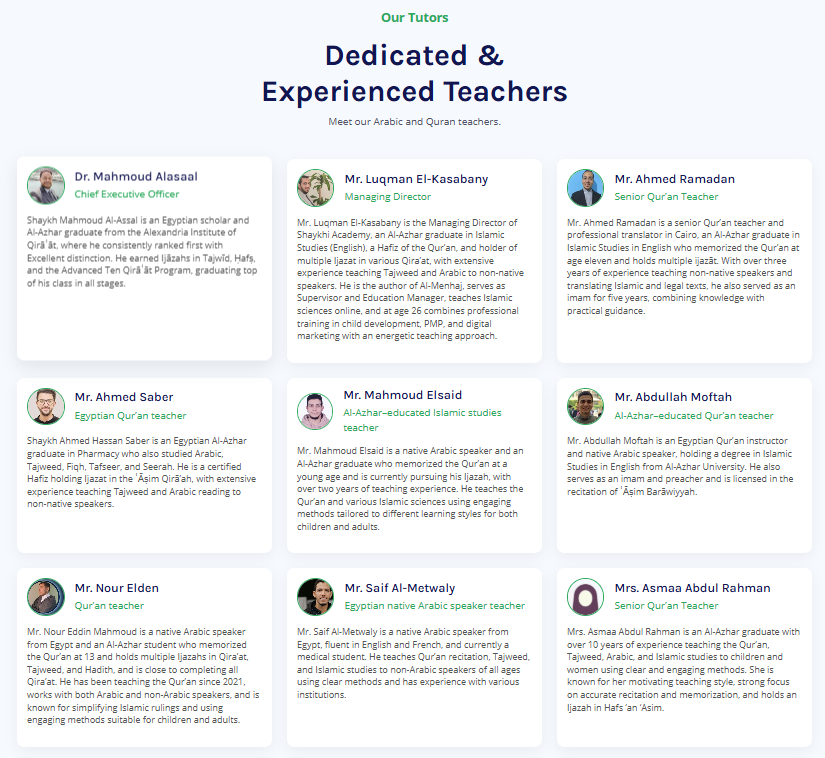
Meet our certified Quranic Arabic teachers
Read Also: Quranic Dua for Parents
A Practical Guide to Eclipse Worship — What to Do During Salat al-Kusuf
The following table summarizes the complete, authenticated Islamic practice during a solar eclipse, based on Prophetic guidance:
| Act of Worship | Description | Source |
| Salat al-Kusuf | Two rak’ahs with extended recitation | Sahih al-Bukhari & Muslim |
| Takbir | Repeated saying of Allahu Akbar | Prophetic guidance |
| General Quranic recitation | Including the verses above | Scholarly consensus |
| Istighfar | Seeking forgiveness from Allah | Prophetic guidance |
| Sadaqah | Giving charity during the eclipse | Prophetic guidance |
| Dua | Personal supplication in any language | Prophetic guidance |
Our Students Reviews
Ready to Begin Your Quranic Journey?
Start learning with professional instructors through our structured curriculum.
Book Your Free TrialReadv Also: Quranic Dua for Shifa and Healing
Begin Your Quranic Arabic Journey with The Quranic Arabic Academy
The verses you have just read carry meanings that translation can only partially convey. Understanding them in their original Arabic — recognizing سَخَّرَ, feeling الصَّمَد, grasping يَسْبَحُونَ — transforms recitation into lived comprehension.
The Quranic Arabic Academy offers:
- Certified instructors with 25+ years of teaching experience
- Personalized 1-on-1 sessions tailored to your pace and level
- Flexible scheduling available 24/7 for students worldwide
- Specialized programs for beginners, adults, and advanced learners
- A free trial lesson to begin with no commitment
Start understanding what you recite — book your free trial today.
Check out our top courses to start learning Quranic Arabic today:
- Quranic Arabic Grammar Course
- Arabic Courses for Understanding the Quran
- Quranic Arabic for Beginners
- Online Quranic Arabic Classes for Adults
- Quranic Arabic Course for Kids
- Quranic Arabic Course for Sisters
- Online Quranic Arabic Courses for Advanced Learners
Your first class is completely free. Start Learning Quranic Arabic courses Today.

Conclusion
Every solar eclipse is a reminder that the cosmos belongs entirely to Allah. The Quran’s words, recited during that darkened sky, carry weight that no translation can fully hold — because the Arabic itself is the miracle.
When students at The Quranic Arabic Academy reach the point where they read كُلٌّ فِي فَلَكٍ يَسْبَحُونَ and feel the word “swimming” in their chest rather than just processing it as a fact, something changes permanently in how they relate to the Quran. That is the real gift of learning Quranic Arabic.
There is no fabricated eclipse dua that could improve on what Allah has already given us in His Book. The honest answer is always better — and in this case, it leads directly to the Quran’s most beautiful words about creation, trust, and divine sovereignty. Insha’Allah, may each eclipse you witness draw you closer to understanding them in Arabic.
Read Also: Quranic Duas for Success
Read Also: Beautiful Quranic Duas
Frequently Asked Questions About Quranic Duas and the Solar Eclipse
Is There a Specific Dua from the Quran for a Solar Eclipse?
No. There is no specific Quranic dua prescribed exclusively for a solar eclipse in any authentic hadith or scholarly source. The Prophet ﷺ prescribed Salat al-Kusuf, dhikr, istighfar, and sadaqah during eclipses. Muslims should recite general Quranic verses of remembrance and glorification — and avoid any “eclipse dua” with no verified origin.
What Did the Prophet ﷺ Do During a Solar Eclipse?
The Prophet ﷺ performed Salat al-Kusuf — a two-rak’ah prayer with prolonged Quranic recitation — and instructed the community to make dhikr, seek forgiveness, and give charity. He explicitly clarified that eclipses are signs of Allah’s power, not omens related to human events. This is confirmed in Sahih al-Bukhari.
Can I Recite Surah Al-Ikhlas During a Solar Eclipse?
Yes, absolutely. Surah Al-Ikhlas is one of the most universally recommended portions of the Quran for any act of worship or remembrance. It is not an “eclipse dua,” but its declaration of divine oneness and self-sufficiency makes it deeply appropriate during any moment of cosmic awe or spiritual reflection.
Why Does Understanding Quranic Arabic Matter for Eclipse Verses?
The Arabic text of these verses contains layers of meaning that translations cannot fully convey. Words like الصَّمَد, يَسْبَحُونَ, and سَخَّرَ carry precise theological and linguistic weight. Understanding how Quranic Arabic differs from normal Arabic helps you experience these verses as living speech rather than memorized sounds.
How Can I Learn to Understand These Quranic Verses in Arabic?
Start with foundational Quranic Arabic reading skills and build toward grammatical comprehension. At The Quranic Arabic Academy, our Quranic Arabic Grammar Course and Arabic Courses for Understanding the Quran are designed specifically for non-Arabic speakers — with certified instructors, personalized sessions, and a free trial available to start.
Related Articles
Quranic Dua




Leave a Reply