 Quran
Quran
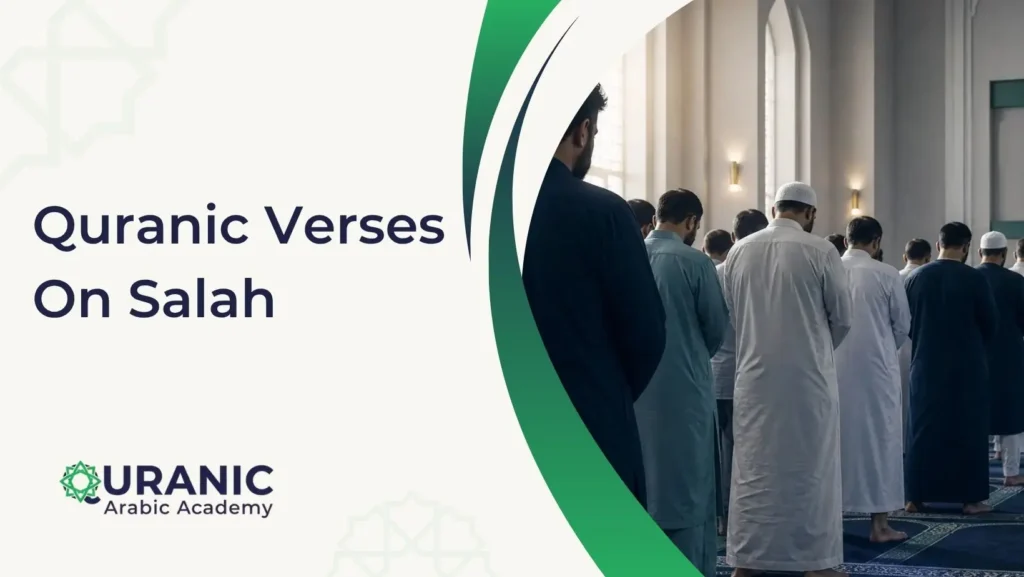
Many people search for quranic verses on salah because they want to reconnect with prayer in a meaningful way. Some are writing an Islamic article or post. Some want verses to quote in a lesson or reminder. Others are trying to understand why salah holds such a central place in Islam and how the Quran describes it.
This article gathers a selection of the most important quranic verses on salah and explains them in a calm, practical, spiritually engaging way. You will find Arabic text, English translation, deeper meaning, and real-life relevance, along with sections that help beginners start learning Quran even in small, manageable steps.
Quranic Quotes on Establishing Salah and Bowing with the Congregation
The Quran often uses the phrase “establish prayer,” and that wording matters. It does not present salah as a casual act or a temporary habit. It presents it as something to be built into life with steadiness and seriousness.
Arabic Quote:
وَأَقِيمُوا الصَّلَاةَ وَآتُوا الزَّكَاةَ وَارْكَعُوا مَعَ الرَّاكِعِينَ
English Translation:
“And establish prayer and give zakah and bow with those who bow.” (Al-Baqarah 2:43)
This verse connects prayer to obedience, charity, and worship within the believing community. It teaches that salah belongs inside a larger life of submission. The believer is not just told to pray individually, but to stand among worshippers and live among acts of devotion.
In practical life, this verse reminds the reader that prayer becomes more stable when it is treated as a foundation, not an afterthought. Many learners struggle with consistency because they think of salah as something to fit into life, while the Quran teaches that life itself should be arranged around salah.
Learning Quran helps consistency, because the more clearly a person understands verses like this, the stronger the connection to prayer becomes.
Quranic Quotes on Seeking Strength Through Patience and Salah
One of the most comforting Quranic teachings about salah is that prayer is a source of strength, especially during difficulty. The Quran does not only command prayer; it teaches the believer to lean on it.
Arabic Quote:
وَاسْتَعِينُوا بِالصَّبْرِ وَالصَّلَاةِ ۚ وَإِنَّهَا لَكَبِيرَةٌ إِلَّا عَلَى الْخَاشِعِينَ
English Translation:
“And seek help through patience and prayer, and indeed, it is difficult except for the humbly submissive.” (Al-Baqarah 2:45)
This verse explains something many people feel but cannot always describe: prayer can feel heavy when the heart is distracted, but it becomes a relief when humility grows. Salah is not presented here as a burden added to hardship. It is presented as support during hardship.
Its real-life relevance is immediate. When a person feels overwhelmed, uncertain, or emotionally tired, this verse teaches that prayer should not be abandoned. It should be used as a means of spiritual support. A common mistake is waiting until one feels spiritually strong before praying well, when in reality prayer is part of how that strength returns.
Ready to Begin Your Quranic Journey?
Start learning with professional instructors through our structured curriculum.
Book Your Free TrialQuranic Quotes on Establishing Salah for the Remembrance of Allah
This verse is one of the clearest expressions of the purpose of salah in the Quran. It gives prayer its center: remembrance of Allah.
Arabic Quote:
إِنَّنِي أَنَا اللَّهُ لَا إِلَٰهَ إِلَّا أَنَا فَاعْبُدْنِي وَأَقِمِ الصَّلَاةَ لِذِكْرِي
English Translation:
“Indeed, I am Allah. There is no deity except Me, so worship Me and establish prayer for My remembrance.” (Taha 20:14)
The importance of this verse lies in its precision. Salah is not only movement, timing, or recitation. It is remembrance. When prayer loses that quality, it becomes dry and rushed. When remembrance returns, the soul begins to feel the meaning of standing before Allah.
Practically, this verse changes how one approaches prayer. Instead of seeing salah as a repeated task, the believer sees it as a repeated return. Understanding even a little of what is recited can help that remembrance grow, which is why learning Quran step by step matters so much, even for beginners.
Understanding Salah Through Structured Learning
If you want to move beyond simply reading about salah and begin truly understanding its meaning, structured learning makes a real difference. Instead of relying only on translation, studying Quranic Arabic helps you recognize key words, sentence structures, and deeper meanings within each ayah, allowing you to reflect more deeply on the message of salah
The Best Quranic Arabic Classes at The Quranic Arabic Academy guide you step by step through grammar, vocabulary, and linguistic patterns found throughout the Quran. With consistent learning, you’ll start to see how verses about salah connect, how meanings unfold, and how your relationship with the Quran becomes stronger and more personal.
Start your journey today and turn your understanding of Quranic verses on salah into a deeper, lasting connection.
The Importance of Observing Salah at Its Fixed Times in the Quran
The Quran also teaches that prayer has structure and order. Salah is not left to random convenience.
Arabic Quote:
إِنَّ الصَّلَاةَ كَانَتْ عَلَى الْمُؤْمِنِينَ كِتَابًا مَّوْقُوتًا
English Translation:
“Indeed, prayer has been decreed upon the believers at fixed times.” (An-Nisa 4:103)
This verse shows the seriousness of timing in Islam. Salah is not only valuable because of what it contains, but also because of the discipline it creates. It trains the believer to return to Allah throughout the day, not only when emotionally motivated.
In real life, this verse offers a clear practical lesson: one of the strongest ways to improve prayer is to protect its times. Many people look for inspiration, but this verse offers something just as important—structure. Spiritual growth is rarely sustained without disciplined timing.
Shots Videos from Our Courses
Ready to Begin Your Quranic Journey?
Start learning with professional instructors through our structured curriculum.
Book Your Free TrialThe Role of Salah in Preventing Sin and Wrongdoing
The Quran explains that true prayer has an effect beyond the prayer mat. It shapes behavior.
Arabic Quote:
اتْلُ مَا أُوحِيَ إِلَيْكَ مِنَ الْكِتَابِ وَأَقِمِ الصَّلَاةَ ۖ إِنَّ الصَّلَاةَ تَنْهَىٰ عَنِ الْفَحْشَاءِ وَالْمُنكَرِ
English Translation:
“Recite what has been revealed to you of the Book and establish prayer. Indeed, prayer prohibits immorality and wrongdoing.” (Al-Ankabut 29:45)
This is one of the most powerful verses on salah because it answers a deep question: what should prayer actually do in a person’s life? The answer is moral transformation. Salah should reduce shamelessness, wrongdoing, and carelessness.
Its practical relevance is strong. If someone is praying regularly but sees no improvement in speech, habits, honesty, or self-control, this verse invites reflection. The issue may not be the number of prayers, but the level of attention, sincerity, and understanding within them.
Guided reading improves confidence, and understanding the Quran makes prayer more meaningful and harder to neglect.
Quranic Verses on Salah and Humility in Prayer
The Quran praises not only those who pray, but those who bring humility into prayer.
Arabic Quote:
قَدْ أَفْلَحَ الْمُؤْمِنُونَ .
الَّذِينَ هُمْ فِي صَلَاتِهِمْ خَاشِعُونَ
English Translation:
“Certainly will the believers have succeeded: those who are humble in their prayer.” (Al-Mu’minun 23:1–2)
This verse shows that success in Islam is not defined only by achievement in worldly terms. One of the first signs of true success is humility before Allah in salah. Khushu‘ is not decoration added to prayer; it is part of its beauty and power.
In daily life, humility in prayer grows through preparation: praying on time, slowing down, understanding recitation, and reducing distraction. Many learners struggle with khushu‘ because they expect instant depth, but humility often develops gradually through steady practice and sincere effort.
A Warning Against Heedless Prayer
The Quran warns against a kind of prayer that exists outwardly but lacks care inwardly.
Arabic Quote:
فَوَيْلٌ لِّلْمُصَلِّينَ .
الَّذِينَ هُمْ عَن صَلَاتِهِمْ سَاهُونَ
English Translation:
“So woe to those who pray, those who are heedless of their prayer.” (Al-Ma’un 107:4–5)
This verse is striking because it warns people who pray, not only people who leave prayer. That makes it especially relevant for self-reflection. Heedlessness can appear in delay, rushing, inattention, or a lack of seriousness about salah.
In practical terms, this verse is a wake-up call. It teaches that preserving the form of prayer is not enough if the spirit of attentiveness disappears. A common mistake is thinking neglect only means abandonment, while the Quran shows that careless performance is also dangerous.
Ready to Begin Your Quranic Journey?
Start learning with professional instructors through our structured curriculum.
Book Your Free TrialThe Importance of Teaching Salah to Your Family with Patience
The Quran also presents prayer as something that should be protected within the home and taught with patience.
Arabic Quote:
وَأْمُرْ أَهْلَكَ بِالصَّلَاةِ وَاصْطَبِرْ عَلَيْهَا
English Translation:
“And enjoin prayer upon your family and be steadfast therein.” (Taha 20:132)
This verse gives a balanced message. It commands care for family prayer, but it also commands patience. That is important because building a praying household is not achieved through pressure alone. It requires repetition, gentleness, and personal example.
Its real-life lesson is clear for parents, teachers, and older siblings. Salah should be protected in the home with wisdom and steadiness. The verse also reminds the believer to be patient with personal growth. Consistency is built over time.
Read Also: Quranic Verses About Business
Helping Children Understand Quranic Verses on Salah
If you want your child to go beyond simply reading Quranic verses on salah and begin to understand their meaning, the Quranic Arabic Course for Kids offers a structured and engaging path. Through simple explanations and interactive lessons, children start recognizing key words related to prayer, making the verses they read more meaningful and easier to connect with.
This course also helps young learners build a strong foundation in Quranic Arabic, allowing them to follow along with verses about salah with greater confidence. Over time, this understanding nurtures a deeper spiritual connection, where prayer is not just practiced, but truly felt and appreciated.
Enroll today and make every Quranic verse more meaningful and understood.
How can Quranic verses about salah strengthen your daily prayers?
They strengthen your prayers by turning them from routine actions into meaningful acts of worship. When you reflect on verses about salah, you begin to understand its purpose, importance, and spiritual impact. This deeper understanding helps you approach prayer with more focus, sincerity, and awareness of standing before Allah.
As you revisit these verses regularly, they begin to influence your behavior—encouraging you to pray on time, improve your concentration, and be more mindful during recitation. You become more aware of distractions and more intentional in your presence during prayer. Over time, this connection transforms salah from a daily obligation into a source of calm, discipline, and spiritual strength.
Read Also: Quranic Verses About Science And Technology
What is a simple way to stay consistent with Quranic verses about salah?
A simple and effective way is to follow a small, repeatable routine. Choose one verse, read it slowly in Arabic and English, and understand its meaning. Then connect that verse to one specific improvement in your prayer—such as better focus, praying on time, or reducing distractions.
Repeat this process throughout the week instead of constantly moving to new verses. This repetition helps the meaning stay present in your mind and makes it easier to apply during your daily prayers. Over time, these small, consistent steps build strong habits, deepen your connection with salah, and make your worship more stable and meaningful.
Our Students Reviews
Ready to Begin Your Quranic Journey?
Start learning with professional instructors through our structured curriculum.
Book Your Free TrialRead Also: Quranic Verses on Environment Protection
Why quranic arabic academy Helps You Start Quran Reading with Confidence?
For readers who want more than quotations and want to begin learning with structure, quranicarabicacademy. offers a practical path forward.
- Beginner-friendly Quran reading support
- Arabic learning that improves Quran understanding
- Guided recitation practice with steady progress
- Structured online courses that help build consistency
- Support that makes starting feel simple and manageable
Start your journey with Quranic Arabic Academy today and build a strong, confident connection with the Quran step by step.
Check out our top courses to start learning Quranic Arabic today:
- Quranic Arabic Grammar Course
- Arabic Courses for Understanding the Quran
- Quranic Arabic for Beginners
- Online Quranic Arabic Classes for Adults
- Quranic Arabic Course for Kids
- Quranic Arabic Course for Sisters
- Online Quranic Arabic Courses for Advanced Learners
Your first class is completely free. Start Learning Quranic Arabic courses Today.
Ready to Begin Your Quranic Journey?
Start learning with professional instructors through our structured curriculum.
Book Your Free TrialConclusion
The Quran speaks about prayer with clarity, dignity, and depth. These verses on salah show that it is not just an obligation to complete, but a relationship to protect. It is remembrance of Allah, a source of strength in hardship, a discipline rooted in fixed times, an expression of humility before the Creator, and a force that shapes character.
For anyone writing Islamic content, teaching others, collecting Quranic references, or trying to improve personally, these Begin with one verse, reflect deeply, and return to it often. Learning the Quran in small steps still opens big doors, and understanding even a little can make salah more present, more sincere, and more transformative.
FAQ
What are the most important verses on salah?
Among the most important are Al-Baqarah 2:43, Al-Baqarah 2:45, An-Nisa 4:103, Taha 20:14, Al-Ankabut 29:45, Al-Mu’minun 23:1–2, and Al-Ma’un 107:4–5 because they cover command, remembrance, timing, humility, moral effect, and warning.
Why do people search for verses about salah?
They usually want Quranic evidence for Islamic writing, reminders about prayer, educational material, verses for reflection, or support in reconnecting with salah.
How can verses about salah improve my prayer?
These verses explain the purpose of prayer, warn against neglect, and encourage humility, timing, remembrance, and moral change. Reflecting on them can make salah more conscious and sincere.
Can beginners benefit from verses about salah?
Yes. Even reading one verse in Arabic and English with a short explanation can strengthen understanding and improve emotional connection to prayer.
What is the best way to study verses about salah?
Start small. Read one verse regularly, understand its meaning, and connect it to one practical action in your daily prayers.









Leave a Reply