 Quranic Verses
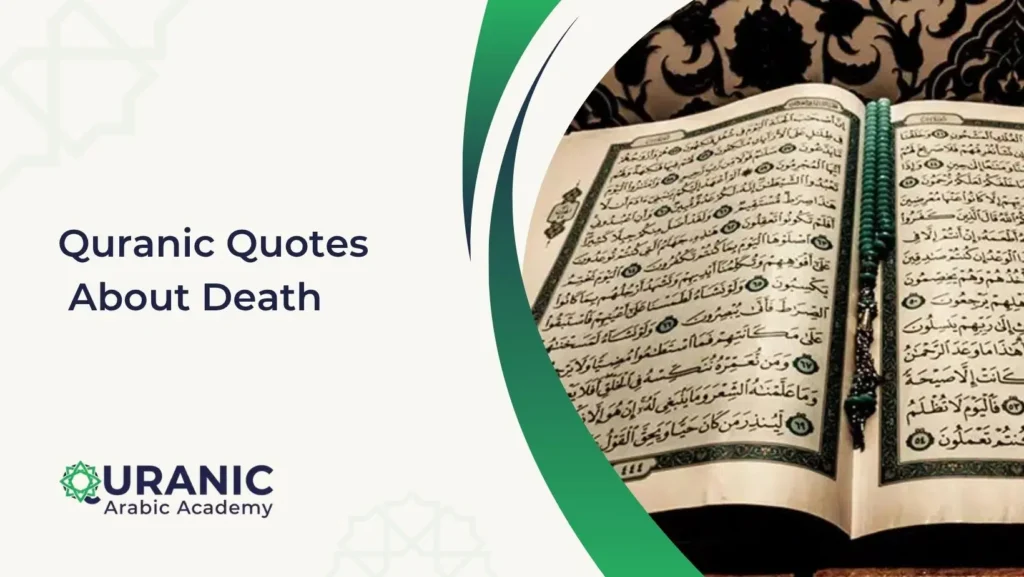
Many people search for quranic quotes about death when they are grieving, anxious, or trying to understand the purpose of life more deeply. Death touches every soul, yet the Quran speaks about it with remarkable balance: seriousness without despair, warning without cruelty, and hope without false comfort.
In this guide, you will find carefully selected quranic verses on death in Arabic – English, followed by reflection, meaning, and real-life relevance. You will also find duas that help the heart stay steady, a section for beginners who want to start learning Quran gradually, and practical guidance on how often and when to read these verses for reflection.
Quranic Verse on the Reality of Death and Accountability
Death is presented in the Qur’an as a universal reality that every soul must experience, without exception or delay. It serves as a reminder of accountability, encouraging reflection on one’s actions and preparation for the return to Allah.
Arabic Quote:
كُلُّ نَفْسٍ ذَائِقَةُ الْمَوْتِ
English Translation:
Every soul shall taste death.
This short verse is powerful because it removes the illusion of exception. Death is not only for the elderly, the sick, or the unfortunate. It is the path of every human being. In Islamic reflection, this truth does not weaken life. It gives life weight. It teaches that what matters is not how long a person stays, but how truthfully they live before meeting Allah.
A common mistake is to read this verse only in moments of loss. In reality, it is also a verse for daily discipline. It helps a believer forgive faster, repent earlier, and waste less time. Guided reading often makes this understanding easier and more stable over time.
Ready to Begin Your Quranic Journey?
Start learning with professional instructors through our structured curriculum.
Book Your Free TrialQuranic Verse on the Inescapability of Death
Death is described in the Qur’an as an unavoidable reality that reaches every person no matter where they are or how protected they may seem. It reminds the heart of the certainty of mortality and the importance of preparing for the meeting with Allah through faith and righteous deeds.
Arabic Quote:
أَيْنَمَا تَكُونُوا يُدْرِككُّمُ الْمَوْتُ وَلَوْ كُنتُمْ فِي بُرُوجٍ مُّشَيَّدَةٍ
English Translation:
Wherever you may be, death will overtake you, even if you should be within lofty towers.
This verse corrects a common human instinct: the belief that control creates safety. Islam does not reject planning, medicine, or caution. But it rejects the illusion that material strength can cancel divine decree. That realization can be humbling, but it can also be freeing. It teaches the heart to rely on Allah rather than on structures, status, or fear-based control.
In real life, this verse helps a person reduce excessive anxiety. Many learners struggle with reading verses about death because they expect only fear from them. Yet this verse also teaches surrender. When the heart accepts that life and death are in Allah’s hands, it becomes easier to live with courage and worship with sincerity.
Deepen Your Reflection on Death Through Understanding Quranic Arabic
Reflecting on Quranic verses on death often raises deeper questions about life, purpose, and the Hereafter. While reading translations can inspire, understanding the original Arabic brings a completely different level of clarity and connection. It allows you to engage with the verses more personally, noticing meanings, emphasis, and depth that are not always fully captured in translation.
Online Quranic Arabic Classes for Adults provide a structured and supportive way to move from simple reading to real understanding. As you learn the language of the Quran, your reflection on verses about death becomes more meaningful, helping you connect knowledge with faith, and contemplation with action.
Start your journey today and experience the Quran beyond translation.
Read also: Quranic Embryology With The Verses In The Quran
Quranic Verse on Sincere and Righteous Deeds as the True Test
Life and death are presented in the Qur’an as part of a divine test, where the true measure of a person lies in the quality and sincerity of their deeds. It shifts the focus of life toward purpose, reminding the believer that every action is part of a greater examination.
Arabic Quote:
الَّذِي خَلَقَ الْمَوْتَ وَالْحَيَاةَ لِيَبْلُوَكُمْ أَيُّكُمْ أَحْسَنُ عَمَلًا
English Translation:
He who created death and life to test you as to which of you is best in deed.
This is one of the most important reflections on death because it shifts the conversation from fear to purpose. Death is not a random interruption; it is part of the test that gives moral meaning to life. The verse does not say “most deeds.” It says “best in deed,” pointing toward sincerity, purity, and obedience rather than performance alone.
Its practical insight is simple but profound: every day becomes part of preparation. A quiet prayer, honest work, patience in pain, and sincere repentance all become meaningful when life is understood as a test. Learning Quran, even in small steps, helps believers return to this perspective again and again.
Shots Videos from Our Courses
Ready to Begin Your Quranic Journey?
Start learning with professional instructors through our structured curriculum.
Book Your Free TrialQuranic Verse on the Inevitable Reality of Death
Death is described in the Qur’an as a moment of absolute truth that every soul will inevitably face, removing all delay and certainty of escape. It serves as a powerful reminder of accountability and the reality of returning to Allah after life in this world.
Arabic Quote:
وَجَاءَتْ سَكْرَةُ الْمَوْتِ بِالْحَقِّ ۖ ذَٰلِكَ مَا كُنتَ مِنْهُ تَحِيدُ
English Translation:
And the agony of death has come in truth. That is what you were trying to avoid.
This verse is striking because it speaks with honesty. The transition of death is real, serious, and unavoidable. Yet the verse is not cruel. It is a wake-up call. It tells the reader that avoidance does not prepare the soul. Remembrance does. Repentance does. Regular recitation does. Honest worship does.
In practical terms, this verse encourages spiritual readiness before crisis arrives. A person does not need to wait for illness or old age to begin reflecting. Even a few minutes of Quran reading each day can create a stronger relationship with these truths and make them easier to carry with balance.
Read also: Can Arabs Understand Quran Arabic?
Quranic Verses About Death and the Fixed Term Written by Allah
Death in the Qur’an is presented as a reality bound by Allah’s decree, where every soul has a fixed and appointed term that cannot be changed. This strengthens the heart with awareness of accountability and encourages preparation for the meeting with Allah through faith and righteous deeds.
Arabic Quote:
وَمَا كَانَ لِنَفْسٍ أَنْ تَمُوتَ إِلَّا بِإِذْنِ اللَّهِ كِتَابًا مُّؤَجَّلًا
English Translation:
No soul can ever die except by Allah’s permission at a decreed and appointed time.
This verse is one of the clearest explanations of death for readers who want to understand how Islam views life, death, and divine decree. It teaches that death is never random, premature, or outside the knowledge of Allah. Every soul has a fixed term already known and written by Him.
For many readers, this verse brings both humility and comfort. It reminds us that human beings do not control the moment of death, no matter how strong, careful, or fearful they may be. At the same time, it reassures the heart that every life ends according to Allah’s wisdom, not chaos. This makes the verse especially meaningful for those reflecting on loss, anxiety, or the deeper purpose of life.
A practical insight from this verse is that it helps believers live with greater trust in Allah while focusing on righteous action. Since the time of death is already appointed, the real question is not how to escape it, but how to meet Allah with faith, sincerity, and good deeds.
Understand Quranic Verses on Death Through The Best Quranic Arabic Classes
If reflecting on Quranic verses on death has made you think more deeply about life, purpose, and the Hereafter, then learning Quranic Arabic can take that reflection further. Instead of only reading translations, you begin to understand how the original words convey meaning about death, accountability, and what truly matters.
The Best Quranic Arabic Classes at Quranic Arabic Academy give you a structured path to do that. With clear lessons and guided support, you’ll learn how to read and analyze verses with confidence—so your reflection on death becomes deeper, clearer, and more personal.
Start learning today and experience the Quran beyond translation.
Read also: Quranic Cosmology – What the Quran Reveals About the Universe?
Quranic Verses About Death and the Appointed Time of Every Soul
Life and death are appointed by Allah with perfect wisdom and fixed timing that cannot be delayed or advanced. This reminds the heart that every soul has a determined term, encouraging reflection, readiness, and trust in Allah’s decree.
Arabic Quote:
وَلِكُلِّ أُمَّةٍ أَجَلٌ ۖ فَإِذَا جَاءَ أَجَلُهُمْ لَا يَسْتَأْخِرُونَ سَاعَةً وَلَا يَسْتَقْدِمُونَ
English Translation:
Every nation has an appointed term. When their time comes, they can neither delay it by a single hour nor bring it forward.
This verse is one of the most meaningful explanations of death for readers seeking clarity about divine timing. It teaches that every people and every created community has a fixed term set by Allah. Once that appointed time arrives, it cannot be postponed, accelerated, or changed by human effort.
The verse carries a powerful message about certainty and surrender. Human beings often try to control the future, resist loss, or imagine that timing is fully in their hands. But this ayah reminds the believer that life and death unfold according to Allah’s perfect knowledge and wisdom. Nothing comes too early, and nothing comes too late.
For readers reflecting on death, this verse offers both warning and comfort. It warns against living carelessly, as time is limited and appointed. At the same time, it comforts the heart by showing that death is never outside Allah’s decree. A practical lesson from this verse is to stop delaying repentance, worship, and sincere change, because the appointed time is certain even if it remains unseen.
Read Also: 50 Quranic Verses And Quotes
When to Reflect on Quranic Verses About Death for Meaningful Reflection?
Quranic verses about death are often most impactful when read during quiet moments of reflection, when the heart is calm and the mind is less distracted. For many readers, this may be after Fajr, following salah, or before sleep. At these times, the soul is more open to reflection, and the verses can be absorbed more deeply—not just as words to read, but as truths to live by.
It can also be especially meaningful to revisit these verses during times of grief, illness, loss, or major life changes. In such moments, the purpose is not to create sadness for its own sake, but to allow the Quran to restore perspective, deepen faith, and remind the heart of what truly matters. When these verses are read with understanding and consistency, they often leave a stronger and more lasting spiritual effect.
Read Also: Quranic Verses On Hajj In Arabic And English
Ready to Begin Your Quranic Journey?
Start learning with professional instructors through our structured curriculum.
Book Your Free TrialRead Also: Quranic Verses and Hadith on Fasting
What is the best way to reflect on Quranic verses about death?
The most effective approach is consistent and mindful reflection rather than reading large sections at once without contemplation. Start with a small number of verses about death, read them slowly, and understand their meaning through translation or brief explanation. Then revisit them regularly so their message becomes familiar and deeply rooted in the heart.
This repetition is important because reflection in Islam is not about quantity but about impact. When a verse is revisited often, it becomes easier to remember and begins to influence thoughts, behavior, and priorities in daily life. It gently strengthens awareness of the Hereafter and helps the heart stay balanced between hope in Allah’s mercy and preparation for accountability.
Our Students Reviews
Ready to Begin Your Quranic Journey?
Start learning with professional instructors through our structured curriculum.
Book Your Free TrialRead Also: Quranic Verses On Sabr
Why quranic arabic academy Helps You Start Quran Reading About Death in Islam with Confidence?
If reflecting on quranic quotes about death has made you want a closer relationship with the Quran, quranicarabicacademy can help you begin in a calm and structured way.
- Step-by-step Quran reading support for beginners
- Arabic learning that makes verses easier to understand
- Guided recitation practice to improve confidence gradually
- Structured lessons that help build consistency without pressure
- Supportive courses that connect reading with meaning and reflection
Discover how Quranic Arabic Academy can help you start your journey today and build a deeper, more confident connection with the Quran.
Check out our top courses to start learning Quranic Arabic today:
- Quranic Arabic Grammar Course
- Arabic Courses for Understanding the Quran
- Quranic Arabic for Beginners
- Online Quranic Arabic Classes for Adults
- Quranic Arabic Course for Kids
- Quranic Arabic Course for Sisters
- Online Quranic Arabic Courses for Advanced Learners
Your first class is completely free. Start Learning Quranic Arabic courses Today.
Ready to Begin Your Quranic Journey?
Start learning with professional instructors through our structured curriculum.
Book Your Free TrialConclusion
The best verses about death do more than remind us that life ends. They teach why life matters, how the soul should prepare, and where hope should remain. In Arabic–English, these verses become even more accessible for readers who want both emotional comfort and deeper understanding.
Reflecting on death in Islam is not meant to make the believer hopeless. It is meant to make the believer honest, awake, and closer to Allah. And for anyone beginning that journey, learning Quran little by little can turn occasional reflection into a lifelong source of guidance, peace, and readiness.
FAQ
What is the most famous Quranic quote about death?
The most famous is: “Every soul shall taste death.” It is short, direct, and central to Islamic reflection on life’s temporary nature.
Do Quranic Verses About Death Help with Grief?
Yes. They do not erase sadness, but they give grief meaning, remind the heart of Allah’s decree, and encourage patience, dua, and hope.
Is it good to read quranic verses on death regularly?
Yes. Reading them regularly can soften the heart, increase repentance, and help a person live more consciously and sincerely.
Can Beginners Benefit from Quranic Verses About Death?
Absolutely. Even one verse with translation and a short explanation can be deeply beneficial. Starting small is often the best way to build a lasting Quran habit.
Are there duas to read when reflecting on death in Islam?
Yes. Duas for forgiveness, steadfastness, patience, protection from the grave, and a righteous ending are all especially relevant.
Related Articles
Quranic Verses





Leave a Reply