 Quranic Verses
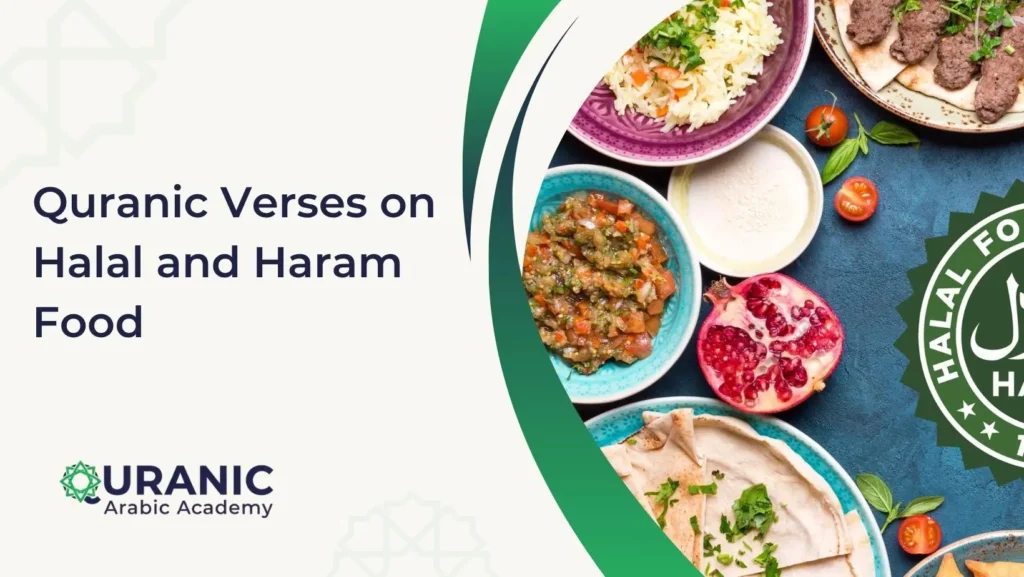
Food is one of the most constant parts of everyday life, yet the Quran treats it as more than physical nourishment. What a person eats affects the body, but it also shapes character, discipline, and spiritual consciousness. That is why many people search for Quranic verses on halal and haram food: they are not only looking for a list of rules, but for guidance that helps them align daily choices with faith.
This guide explores the most important Quranic verses on halal and haram food in Arabic and English meaning, then explains what they teach in a practical and spiritually grounded way. Whether you are reviewing familiar knowledge or trying to understand these rulings more deeply, these verses offer a clear foundation for conscious eating in Islam.
What Halal and Haram Food Mean in the Quran?
In the Quran, halal refers to what is lawful and permitted, while haram refers to what is forbidden. But the Quran adds an important dimension through the word tayyib, which means good, pure, wholesome, and beneficial. That distinction matters because Islam does not teach Muslims to think about food only in legal terms. It teaches them to think about food morally and spiritually as well.
This is why Quranic guidance on food is so balanced. The Quran does not create needless hardship, nor does it leave believers without limits. It allows wide provision while setting clear boundaries. A Muslim is therefore taught to receive food with gratitude, but also with responsibility.
When these verses are understood together, they create a complete mindset. Food should be lawful in source, sound in method, and good in quality. That is what makes Quranic dietary guidance more than a technical list. It becomes part of a believer’s relationship with Allah.
Surah Al-Baqarah Quotes on Lawful and Good Food
Choosing what we eat is not just a daily habit, but a reflection of our faith and awareness of Allah. Islam teaches that food should be both lawful and pure, shaping not only the body but also the heart and spiritual state of a believer.
Arabic:
يَا أَيُّهَا النَّاسُ كُلُوا مِمَّا فِي الْأَرْضِ حَلَالًا طَيِّبًا
English Meaning:
“O mankind, eat from what is on earth that is lawful and good.”
This verse lays the foundation for the Quran’s guidance on eating. It begins with a universal address to all people, showing that lawful and wholesome consumption is part of a broader human moral order, not only a rule for a small group. The command is simple, but its depth is significant: eat what is halal and tayyib.
That pairing deserves attention. Many people focus only on what is technically permitted, yet the Quran points beyond bare permissibility. Food should also be good, clean, and beneficial. It should nourish the body without pulling the heart away from mindfulness and gratitude. A believer is therefore not meant to ask only, “Is this allowed?” but also, “Is this good, pure, and fitting for a life of obedience?”
This verse also reflects mercy. Allah created abundant provision on earth and did not make lawful eating unnecessarily restrictive. The balance of Islam appears clearly here: openness without carelessness, and freedom without moral confusion.
In daily life, this verse encourages thoughtful eating. It invites Muslims to care not only about ingredients, but also about quality, ethical sourcing, and the way food supports a healthy and thankful life.
Shots Videos from Our Courses
Ready to Begin Your Quranic Journey?
Start learning with professional instructors through our structured curriculum.
Book Your Free TrialSurah Al-Baqarah Quotes on Forbidden Foods
Islam does not leave the concept of food unrestricted, but clearly defines boundaries to protect both the body and the soul. These limits remind the believer that obedience to Allah extends even to what is consumed, reinforcing discipline, purity, and spiritual awareness in everyday life.
Arabic:
إِنَّمَا حَرَّمَ عَلَيْكُمُ الْمَيْتَةَ وَالدَّمَ وَلَحْمَ الْخِنزِيرِ وَمَا أُهِلَّ بِهِ لِغَيْرِ اللَّهِ
English Meaning:
“He has only forbidden for you carrion, blood, the flesh of swine, and that over which a name other than Allah has been invoked.”
This verse is one of the clearest Quranic statements on prohibited food. The wording is precise and direct, which reflects an important principle in Islam: Allah does not burden believers with confusion in core matters. He makes the limits clear. The verse names the central prohibitions directly so that Muslims can distinguish between lawful consumption and what must be avoided.
The list itself is meaningful. It includes dead animals not properly slaughtered, blood, pork, and food dedicated to other than Allah. Together, these categories show that the Quran’s dietary rules are not only about physical substance. They are also about sacred boundaries, intention, and reverence for divine guidance.
This verse continues with one of the most merciful principles in Islamic law: necessity. If a person is compelled by real need, without seeking sin or transgressing the limit, Allah is Forgiving and Merciful. This shows that Islamic dietary law combines clarity with compassion. It is firm, but never cruel.
For modern readers, this verse remains deeply relevant. Many ingredients are hidden within processed foods, and not every product is transparent about what it contains. This Quranic guidance encourages vigilance, not anxiety—awareness rooted in faith rather than fear.
From Knowing Halal and Haram to Truly Understanding It
Reading about Quranic verses on halal and haram food gives you clarity—but learning Quranic Arabic gives you certainty. Instead of relying only on translations, you begin to understand exactly how and why Allah defines what is permissible and forbidden.
The Quranic Arabic Academy’s Arabic Courses for Understanding the Quran help you connect these rulings to their original meanings. You’ll recognize the precise words used in halal and haram contexts, understand their linguistic depth, and see how every verse carries guidance beyond surface translation.
Don’t just read the rulings—understand them from the source. Start your journey with Quranic Arabic today.
Surah Al-Ma’idah Quotes on Dietary Laws and Proper Slaughter
Dietary laws in Islam are not only about what is eaten, but also how it is prepared and the intention behind it. They reflect a system of purity, mercy, and obedience, reminding the believer that even acts as routine as eating can become a form of worship when done according to Allah’s guidance.
Arabic:
حُرِّمَتْ عَلَيْكُمُ الْمَيْتَةُ وَالدَّمُ وَلَحْمُ الْخِنزِيرِ وَمَا أُهِلَّ لِغَيْرِ اللَّهِ بِهِ
English Meaning:
“Forbidden to you are carrion, blood, the flesh of swine, and that which has been dedicated to other than Allah.”
Surah Al-Ma’idah expands the discussion by adding detail about the conditions in which animals die and the importance of proper slaughter. This makes an essential point clear: in Islam, food is judged not only by what it is, but also by how it reaches the table.
That matters because many people reduce halal to a short list of ingredients. The Quran presents a fuller vision. Method matters. Intention matters. The name of Allah matters. An animal may belong to a lawful category, but if the process is not Islamically valid, the ruling changes. This is what gives halal its depth. It is not a label detached from reality; it is a framework that includes source, treatment, and religious compliance.
This verse also protects Muslims from casual assumptions. In a time when industrial food systems often separate consumers from how food is produced, the Quran restores moral attention to the process itself. Halal is not only about the final product. It includes the path by which it was obtained.
The verse therefore teaches discipline and integrity. What a believer eats should reflect care, not negligence. Proper slaughter is not a minor technicality. It is part of what makes food lawful in the sight of Allah.
Ready to Begin Your Quranic Journey?
Start learning with professional instructors through our structured curriculum.
Book Your Free TrialSurah Al-An‘am Quotes on Beginning to Eat with the Name of Allah
Eating from animals on which Allah’s name has been mentioned at the time of slaughter is a sign of their permissibility. It reflects that true faith is shown through following Allah’s commands and adhering to His prescribed rules in all aspects of life, including food.
Arabic:
فَكُلُوا مِمَّا ذُكِرَ اسْمُ اللَّهِ عَلَيْهِ
English Meaning:
“So eat from that upon which the name of Allah has been mentioned.”
And later in the same passage:
Arabic:
وَلَا تَأْكُلُوا مِمَّا لَمْ يُذْكَرِ اسْمُ اللَّهِ عَلَيْهِ
English Meaning:
“Do not eat from that upon which the name of Allah has not been mentioned.”
These verses add a deeply spiritual dimension to the subject of food. Eating in Islam is not meant to be a detached biological act. It is connected to remembrance of Allah. By mentioning His name, the believer recognizes that provision comes from Him and that lawful consumption must remain under His guidance.
This transforms the tone of eating completely. Food is no longer just habit, appetite, or convenience. It becomes part of worship. The Quran teaches Muslims to consume consciously, not heedlessly. That is why these verses are so powerful. They show how an ordinary daily act can become spiritually meaningful through intention and obedience.
These passages also warn against confusion, false claims, and following others in matters Allah has already clarified. Across cultures and generations, people often mix religious rulings with assumptions, habits, or social pressure. The Quran cuts through that uncertainty and brings the believer back to revelation.
In practical terms, these verses encourage Muslims to care about both formal halal standards and personal remembrance. Saying Bismillah before eating, choosing food with awareness, and treating provision as a trust all grow naturally from this Quranic teaching.
Unlock the Full Meaning of Halal and Haram with The Quranic Arabic Academy
Exploring the Quranic verses on halal and haram food shows you what is permitted and forbidden—but real understanding begins when you engage with these verses in their original Arabic. Translation gives you the surface, but Quranic Arabic gives you precision, clarity, and confidence.
With The Best Quranic Arabic Classes at The Quranic Arabic Academy, you’ll learn how to break down the exact language used in the Quran—so you don’t just read rulings, you fully understand them.
Enroll now and start understanding the Quran the way it was meant to be understood.
Ready to Begin Your Quranic Journey?
Start learning with professional instructors through our structured curriculum.
Book Your Free TrialSurah An-Nahl Verses on Halal Provision and Gratitude
Provision in Islam is not only about what is allowed to consume, but also about recognizing it as a blessing from Allah. The verse connects lawful sustenance with gratitude, reminding the believer that acknowledging Allah’s favors is part of living a mindful and faithful life.
Arabic:
فَكُلُوا مِمَّا رَزَقَكُمُ اللَّهُ حَلَالًا طَيِّبًا وَاشْكُرُوا نِعْمَتَ اللَّهِ
English Meaning:
“So eat from what Allah has provided for you, lawful and good, and be grateful for the blessing of Allah.”
This verse brings together three themes that appear repeatedly in Quranic dietary guidance: lawful food, wholesome provision, and gratitude. Food is not merely something earned, bought, or prepared. At its deepest level, it is rizq from Allah. That understanding changes the way a believer approaches even the simplest meal.
Gratitude here is not only a feeling or phrase. It is a form of obedience. A Muslim shows thanks for Allah’s blessings by using them within the limits Allah has set. That is why the verse links lawful and good food directly with thankfulness. The connection is deliberate. One of the signs of gratitude is not using Allah’s provision in a way He has forbidden.
This verse also softens the way Muslims think about dietary rules. Halal is not meant to be experienced as deprivation. It is guidance within abundance. Allah permitted much and forbade little in comparison. What He allowed is vast, and what He restricted carries wisdom for both body and soul.
When this verse is internalized, eating becomes calmer and more meaningful. The believer sees food not only as sustenance, but as a daily opportunity to remember the Giver.
The Difference Between Halal and Tayyib in the Quran
One of the most important insights in these Quranic verses on halal and haram food is the distinction between halal and tayyib. They are closely connected, but they are not identical.
Halal refers to permissibility. It answers the legal question: is this allowed?
Tayyib points to goodness, wholesomeness, purity, and benefit. It answers the moral and qualitative question: is this good and fitting?
This difference matters more than many people realize. A person may become highly focused on labels while neglecting the broader Quranic ethic of purity and soundness. The Quran does not teach Muslims to live at the level of legal minimum alone. It trains them to seek what is both permissible and good.
That has real relevance in modern food culture. Processed ingredients, artificial additives, unclear sourcing, and commercial shortcuts make it easy to think only in terms of what is technically acceptable. The Quran asks for more thoughtful living. It encourages believers to seek food that aligns with health, cleanliness, honesty, and spiritual dignity.
Read Also: Quranic Verses on Anger Management
Ready to Begin Your Quranic Journey?
Start learning with professional instructors through our structured curriculum.
Book Your Free TrialRead Also: Quranic Verses On Ramadan
How Quranic Guidance on Food Applies to Modern Life?
Modern food choices are often more complicated than they appear. Ingredients may be hidden under unfamiliar names, preparation methods are not always clear, and restaurant or packaged foods may not reveal enough about sourcing. This is exactly why Quranic principles remain so valuable.
These verses teach Muslims to be careful without becoming extreme. They encourage checking ingredients, verifying meat sources when needed, and not treating halal as a mere marketing term. At the same time, they do not call believers into constant suspicion or hardship. The Quranic method is awareness with balance.
These verses also teach that food choices are part of character. A mindful Muslim does not eat carelessly, especially when clear guidance exists. He tries to make informed choices, begins with the name of Allah, and receives provision with gratitude rather than entitlement.
In this way, the Quran remains directly relevant to modern life. The principles are ancient, but their guidance still answers contemporary questions with clarity.
Read Also: Quranic Verses on Trust in Allah in Arabic
Our Students Reviews
Ready to Begin Your Quranic Journey?
Start learning with professional instructors through our structured curriculum.
Book Your Free TrialHow Quranic Arabic Academy Helps You Understand These Verses?
Reading these verses on your own is beneficial, but guided study often leads to clearer and deeper understanding. Many learners can read a verse without fully understanding its meaning or how it applies to daily life.
Quranic Arabic Academy helps bridge that gap through structured Quran lessons, Arabic reading support, and verse-based learning that goes beyond memorization. Students build understanding with more clarity, confidence, and consistency.
If you want to move from reading to truly understanding the Quran, enroll today with Quranic Arabic Academy and begin your learning journey with guided support.
Check out our top courses to start learning Quranic Arabic today:
- Quranic Arabic Grammar Course
- Arabic Courses for Understanding the Quran
- Quranic Arabic for Beginners
- Online Quranic Arabic Classes for Adults
- Quranic Arabic Course for Kids
- Quranic Arabic Course for Sisters
- Online Quranic Arabic Courses for Advanced Learners
Your first class is completely free. Start Learning Quranic Arabic courses Today.
Ready to Begin Your Quranic Journey?
Start learning with professional instructors through our structured curriculum.
Book Your Free TrialConclusion
Quranic verses on halal and haram food are not just dietary instructions. They are part of a wider spiritual framework that teaches Muslims how to live with discipline, purity, gratitude, and remembrance of Allah. These verses show that even eating can become an act of worship when it is guided by revelation.
When a Muslim understands these passages deeply, halal becomes more than a label. It becomes a way of approaching food with care, awareness, and thankfulness. The believer learns to avoid what Allah forbade, to value what is pure and wholesome, and to remember that every provision is ultimately from Him.
That is the beauty of Quranic guidance on food. It takes an ordinary daily necessity and turns it into a path of conscious obedience and spiritual refinement.
FAQ
What are the main Quranic verses about halal and haram food?
The key verses include Surah Al-Baqarah 2:168 and 2:173, Surah Al-Ma’idah 5:3, Surah Al-An‘am 6:118–121, and Surah An-Nahl 16:114–115.
Is halal only about meat?
No. Meat is a major part of the discussion, especially in relation to slaughter, but halal also includes ingredients, preparation, and avoidance of clearly forbidden substances.
Why does the Quran mention both halal and tayyib?
Because Islam teaches more than legal permissibility. It also teaches purity, wholesomeness, and gratitude. A Muslim should seek food that is both lawful and good.
Is there any exception in cases of necessity?
Yes. The Quran makes clear that if someone is compelled by real necessity, without seeking sin or going beyond the limit, Allah is Forgiving and Merciful.
Can Muslims eat food in non-Muslim countries?
Yes, but they should still verify whether the food meets halal requirements, especially in matters of meat, hidden ingredients, and preparation methods.
Related Articles
Quranic Verses



Leave a Reply