 Quranic Verses
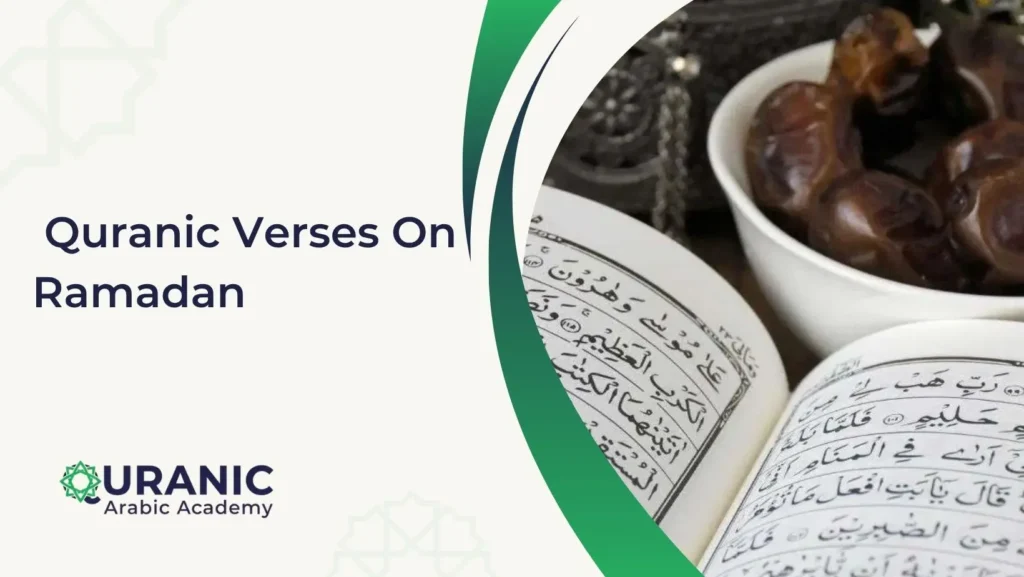
Ramadan is a time when the heart becomes more open to guidance and the soul becomes more receptive to change. The quranic verses on ramadan reveal that fasting is not simply about abstaining from food, but about aligning your actions, thoughts, and intentions with divine purpose.
In this guide, you will explore powerful quranic verses about ramadan (Arabic – English quotes), along with deep explanations and practical insights. You will also learn how to approach Quran reading in a way that builds consistency and understanding.
Surah Al-Baqarah Quotes on Obligation of Fasting
Fasting in Islam is not only an act of worship but also a divine command that reflects the continuity of faith across generations. It is prescribed upon believers as a path toward self-discipline, awareness of Allah, and spiritual growth.
Arabic:
يَا أَيُّهَا الَّذِينَ آمَنُوا كُتِبَ عَلَيْكُمُ الصِّيَامُ كَمَا كُتِبَ عَلَى الَّذِينَ مِن قَبْلِكُمْ لَعَلَّكُمْ تَتَّقُونَ
English:
“O you who have believed, fasting has been prescribed for you as it was prescribed for those before you so that you may become righteous.”
This verse establishes fasting as a divinely ordained act of worship that connects believers across time. It reminds us that fasting is not unique to this الأمة, but part of a continuous spiritual tradition designed to guide humanity toward Allah.
Fasting goes beyond physical abstinence from food and drink. It is a comprehensive act of discipline that refines the soul, controls desires, and strengthens inner awareness. Through hunger and restraint, the believer learns patience, sincerity, and self-control, gradually aligning their actions with what pleases Allah.
The ultimate purpose of fasting is to develop taqwa—a deep, constant consciousness of Allah. This awareness influences every aspect of life, encouraging righteousness in both public and private. By nurturing taqwa, fasting transforms the heart, helping the believer grow closer to Allah and live a more mindful and obedient life.
Quranic Verse About the Limited Days of Fasting
Fasting in Islam is prescribed as a brief and defined period, reminding the believer that acts of worship are both structured and purposeful. These limited days carry deep meaning, focusing the heart on discipline, devotion, and spiritual growth within a set time.
Arabic:
أَيَّامًا مَّعْدُودَاتٍ
English:
“[Fasting for] a limited number of days.”
This concise phrase captures a powerful spiritual reality: Ramadan is brief and intentionally limited. The wording itself carries a sense of ease and mercy, reminding believers that the obligation is not endless, but carefully measured. Each day is part of a short, meaningful journey designed to be completed with sincerity and devotion.
Because these days are few, their value increases. Every fast, every prayer, and every moment of remembrance becomes more significant when time is limited. This awareness encourages believers to stay consistent, avoid procrastination, and make the most of each passing day before it slips away.
Many learners and even seasoned believers underestimate how quickly Ramadan passes. What begins with intention can easily fade into routine if one is not mindful. This verse serves as a gentle wake-up call: cherish the days, stay present, and treat each fast as an opportunity that may not return in the same way again.
Ready to Begin Your Quranic Journey?
Start learning with professional instructors through our structured curriculum.
Book Your Free TrialQuranic Verse Showing Mercy and Flexibility in Fasting
Fasting in Islam is a balanced act of worship that combines devotion with mercy and ease. It reflects Allah’s compassion toward His servants, allowing flexibility in situations of hardship while preserving the spirit and obligation of the command.
Arabic:
فَمَن كَانَ مِنكُم مَّرِيضًا أَوْ عَلَىٰ سَفَرٍ فَعِدَّةٌ مِّنْ أَيَّامٍ أُخَرَ
English:
“So whoever among you is ill or on a journey – then an equal number of other days.”
This verse beautifully highlights the mercy embedded within Islamic law. While fasting is an obligation, it is not meant to cause harm or unbearable difficulty. Allah allows those who are sick or traveling to postpone their fasts, ensuring that acts of worship remain within human capacity.
Islam does not ignore hardship—it acknowledges it with compassion and wisdom. Instead of removing the act of worship entirely, it provides a balanced alternative. The believer still fulfills the obligation, but at a more suitable and manageable time.
This reflects a core principle in Islam: ease and mercy go hand in hand with devotion. Fasting is not about struggle for its own sake, but about sincere worship performed with awareness, balance, and consideration of one’s condition.
Quranic Verse on Feeding the Needy as Part of Fasting
Fasting in Islam is not only about personal discipline, but also about extending care and compassion to others. It teaches that acts of worship are connected with kindness and responsibility toward those in need, strengthening both faith and social mercy.
Arabic:
وَعَلَى الَّذِينَ يُطِيقُونَهُ فِدْيَةٌ طَعَامُ مِسْكِينٍ
English:
“And upon those who are able [but with hardship]—a ransom of feeding a poor person.”
This verse highlights an important social dimension of fasting. While Ramadan focuses on personal discipline and spiritual growth, it also directs the believer’s attention outward toward those in need. Feeding the poor becomes a way to compensate when fasting is difficult, ensuring that acts of worship remain connected to compassion and generosity.
Islam builds a balance between personal worship and social responsibility. Acts of devotion are not isolated rituals—they are meant to shape how a believer interacts with others. By linking fasting with feeding the needy, the Qur’an nurtures empathy and reminds Muslims to care for the less fortunate.
This verse teaches that the spirit of Ramadan goes beyond abstaining from food. It is about cultivating a heart that gives, supports, and uplifts others. In this way, worship transforms into a means of strengthening both one’s relationship with Allah and their responsibility toward society.
Quranic Verse Highlighting the Quran as the Heart of Ramadan
Ramadan is distinguished among all months as the time when divine guidance was revealed, making it a season of light, reflection, and clarity for the believer. It connects fasting with the Qur’an, turning the month into a journey of spiritual renewal and guidance.
Arabic:
شَهْرُ رَمَضَانَ الَّذِي أُنزِلَ فِيهِ الْقُرْآنُ هُدًى لِّلنَّاسِ وَبَيِّنَاتٍ مِّنَ الْهُدَىٰ وَالْفُرْقَانِ
English:
“The month of Ramadan is that in which the Quran was revealed as guidance for mankind and clear proofs of guidance and criterion.”
This verse defines Ramadan not only as a time of fasting, but as the month of the Qur’an. It highlights the true essence of this sacred time: divine guidance. The Qur’an is described as hudā (guidance), bayyināt (clear signs), and furqān (a criterion between truth and falsehood), showing its central role in shaping the believer’s life.
While many focus primarily on abstaining from food and drink, this verse redirects attention to what truly gives Ramadan its meaning—the revelation of the Qur’an. Fasting prepares the heart, but the Qur’an nourishes it. Without engaging deeply with its message, an essential purpose of Ramadan is missed.
This verse serves as a reminder to reconnect with the Qur’an during Ramadan through reading, reflection, and understanding. It is a time to strengthen one’s relationship with Allah’s words, allowing their guidance to influence thoughts, actions, and decisions long after the month has passed.
Shots Videos from Our Courses
Ready to Begin Your Quranic Journey?
Start learning with professional instructors through our structured curriculum.
Book Your Free TrialStart Your Journey to Understanding the Quran in Its Original Language
If these Quranic verses on Ramadan have inspired you to reflect more deeply on Allah’s words, then the next step is learning how to understand them directly in Arabic. The Arabic Courses for Understanding the Quran at the Quranic Arabic Academy are designed to help you move beyond translation and engage with the Quran in its original language. As you study the grammar, vocabulary, and structure of Quranic Arabic, the verses you read in Ramadan become clearer, more meaningful, and more personally impactful.
Instead of simply reading interpretations of verses about fasting, mercy, and guidance, you begin to understand them as they were revealed. This deeper connection transforms your Ramadan experience from reading meaning into living understanding—bringing you closer to the Quran in every ayah you recite.
Join the Arabic Courses for Understanding the Quran to move beyond translation and directly understand the Quranic verses you reflect on during Ramadan in their original Arabic meaning.
Quranic Verse on Ease and Completing the Fast
Fasting in Islam is built upon ease and balance, showing that worship is meant to guide the believer without hardship or burden. It encourages completion with sincerity and gratitude, reflecting Allah’s mercy in every command.
Arabic:
يُرِيدُ اللَّهُ بِكُمُ الْيُسْرَ وَلَا يُرِيدُ بِكُمُ الْعُسْرَ وَلِتُكْمِلُوا الْعِدَّةَ
English:
“Allah intends for you ease and does not intend for you hardship, and [wants] for you to complete the period.”
This verse beautifully combines mercy with responsibility. It makes clear that Islamic obligations, including fasting, are not meant to burden the believer beyond their capacity. Allah’s intention is ease, even within acts of discipline, showing that worship is built on balance rather than unnecessary hardship.
At the same time, the verse emphasizes completion—“so that you may complete the prescribed period.” This highlights the importance of consistency and commitment. While Islam provides flexibility in times of difficulty, the goal remains to fulfill the fast with sincerity and dedication.
Together, these meanings present a powerful principle: Islam is a path of ease without neglecting discipline. The believer is encouraged to approach fasting with a sense of comfort and trust in Allah’s mercy, while also striving to complete it fully, turning Ramadan into a journey of both compassion and perseverance.
Quranic Verse Defining the Clear Boundaries of Fasting
Fasting in Islam is defined with clarity and precision, guiding the believer to observe it with awareness and discipline. These clear boundaries reflect the wisdom of Allah in making worship structured, balanced, and easy to follow in daily life.
Arabic:
وَكُلُوا وَاشْرَبُوا حَتَّىٰ يَتَبَيَّنَ لَكُمُ الْخَيْطُ الْأَبْيَضُ مِنَ الْخَيْطِ الْأَسْوَدِ مِنَ الْفَجْرِ
English:
“And eat and drink until the white thread of dawn becomes distinct from the black thread.”
This verse clearly defines the starting boundary of fasting, providing believers with a precise and visual guideline. The imagery of the “white thread” and “black thread” reflects the transition from night to dawn, ensuring that worship is based on clarity and certainty rather than confusion.
Islam places strong emphasis on precision in acts of worship, and this verse is a clear example of that principle. Fasting is not only about intention—it also requires awareness of timing and commitment to what has been clearly defined. This level of precision helps develop discipline and attentiveness in daily acts of worship.
By setting clear boundaries, the verse also teaches balance. There is a permitted time to eat and drink, and a defined time to abstain. This structure encourages mindfulness and reminds the believer that true devotion lies in following Allah’s guidance with accuracy, sincerity, and conscious awareness.
Quranic Verse on Upholding Moral Boundaries During Fasting
Fasting in Islam is a discipline that strengthens self-control and protects the believer from crossing moral limits. It reminds the heart that true worship is not only about abstaining from food, but also about guarding actions and behavior within the boundaries set by Allah.
Arabic:
تِلْكَ حُدُودُ اللَّهِ فَلَا تَقْرَبُوهَا
English:
“These are the limits set by Allah, so do not approach them.”
This verse shifts the focus of fasting from physical restraint to moral discipline. It reminds believers that fasting is not only about abstaining from food and drink, but also about staying away from actions that violate Allah’s boundaries. True fasting extends to controlling speech, behavior, and intentions.
By saying “do not approach them,” the Qur’an emphasizes prevention, not just avoidance. It teaches the believer to stay far from anything that may lead to sin, creating a protective boundary around their faith. This mindset strengthens self-control and builds a deeper sense of accountability.
Fasting, therefore, becomes a comprehensive act of worship. It trains the believer to live within Allah’s limits in every aspect of life. Through this discipline, Ramadan transforms from a physical practice into a powerful journey of ethical awareness and spiritual refinement.
Read Also: Quranic Verses On Hajj In Arabic And English
What Is the Best Time to Read the Quran During Ramadan?
The best time to read the Quran during Ramadan is during calm and distraction-free moments, especially after Fajr and late at night. These times naturally provide a quiet environment that helps you focus and reflect more deeply on the meanings of the verses.
Reading after Fajr allows you to start your day with clarity and spiritual connection, while nighttime reading—especially before or after Taraweeh—creates a peaceful atmosphere for deeper contemplation.
In short, choose moments when your mind is clear and your heart is fully present, because the quality of reflection matters more than the quantity of reading.
Read Also: Quranic Verses on Anger Management
How Can You Stay Consistent in Reading the Quran During Ramadan?
Consistency is key when engaging with Quranic verses during Ramadan. Daily reading—even in small portions—builds a stronger and more lasting connection than occasional long sessions. Setting a simple, realistic routine, such as reading after each prayer or dedicating a fixed time daily, helps you stay committed throughout the month.
It also helps to set clear, achievable goals. Instead of aiming for large portions that may feel overwhelming, break your reading into manageable sections. This keeps you motivated and prevents burnout. Over time, this steady approach strengthens both your habit and your relationship with the Quran.
Read Also: Quranic Verses on Halal and Haram Food
How Can You Balance Reading and Understanding the Quran in Ramadan?
Focusing on understanding is just as important as reading itself. Rather than rushing to complete large portions, take time to reflect on the meanings of the verses. Even a few verses read with attention and contemplation can have a deeper impact than many pages read quickly.
You can support this by reading a simple tafsir or translation alongside the Arabic. This allows you to connect emotionally and intellectually with the message. Ramadan is not just about finishing the Quran—it’s about allowing its guidance to shape your thoughts, actions, and daily life.
Read Also: Quranic Verses on Trust in Allah in Arabic
Our Students Reviews
Ready to Begin Your Quranic Journey?
Start learning with professional instructors through our structured curriculum.
Book Your Free TrialWhy quranic arabic academy Helps You Start Quran Reading During Ramadan in Islam with Confidence?
- Structured Quranic Arabic programs for all levels
- Focus on understanding meanings deeply
- Beginner-friendly step-by-step system
- Flexible online learning during Ramadan
- Support to build long-term consistency
Start your journey today: quranic arabic academy.
Check out our top courses to start learning Quranic Arabic today:
- Quranic Arabic Grammar Course
- Arabic Courses for Understanding the Quran
- Quranic Arabic for Beginners
- Online Quranic Arabic Classes for Adults
- Quranic Arabic Course for Kids
- Quranic Arabic Course for Sisters
- Online Quranic Arabic Courses for Advanced Learners
Your first class is completely free. Start Learning Quranic Arabic courses Today.
Ready to Begin Your Quranic Journey?
Start learning with professional instructors through our structured curriculum.
Book Your Free TrialConclusion
The quranic verses on ramadan provide a complete framework for spiritual growth. They guide believers toward discipline, gratitude, and deeper awareness of Allah.
By increasing your engagement with these verses and reflecting on their meanings, Ramadan can become a truly transformative experience.
FAQ
What are the most important Quranic verses on Ramadan?
Surah Al-Baqarah (2:183–187) explains the obligation of fasting, its rules, and its exceptions in a clear and complete way. These verses also highlight the spiritual purpose of Ramadan and the development of taqwa.
Why are these verses important?
They connect the practice of fasting with its deeper meaning, which is strengthening awareness of Allah. They show that Ramadan is not only about physical restraint but also about inner purification and discipline.
How can I reflect on these verses better?
Read them slowly with a simple translation or tafsir to understand their meaning clearly. Then think about how each message applies to your daily behavior and try to act on it.
Is fasting only about food?
No, fasting also includes controlling speech, emotions, and actions. It is a complete form of self-discipline aimed at improving character and spiritual awareness.
How can beginners start reading Quran in Ramadan?
Start with small portions and focus on consistency rather than quantity. Even a few verses daily with understanding can build a strong and lasting connection with the Quran.
Related Articles
Quranic Verses





Leave a Reply