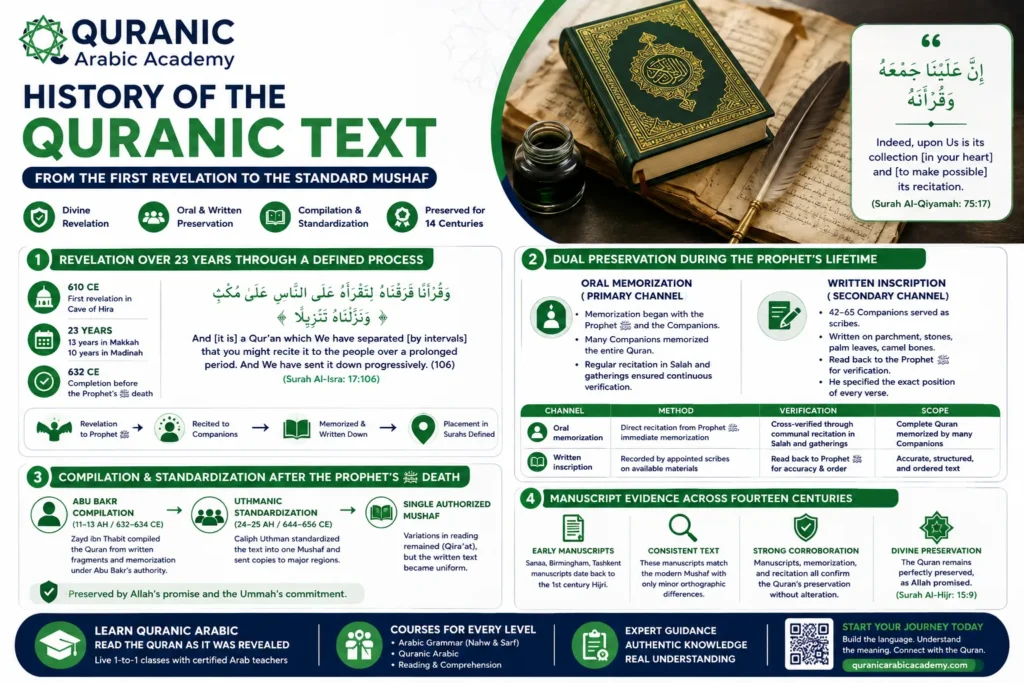
 Quran
Quran

Many Muslims want to build a stronger connection with the Quran but find that their reading feels routine rather than moving.
If you have ever wondered how to make reading the Quran more interesting, the good news is that a few practical changes in mindset, environment, and method can transform your daily recitation into something you genuinely look forward to.
This article walks through twelve practical, well-tested ways to make your Quran reading more engaging and meaningful. Each step focuses on either deepening your understanding, changing your surroundings, or building consistency without pressure.
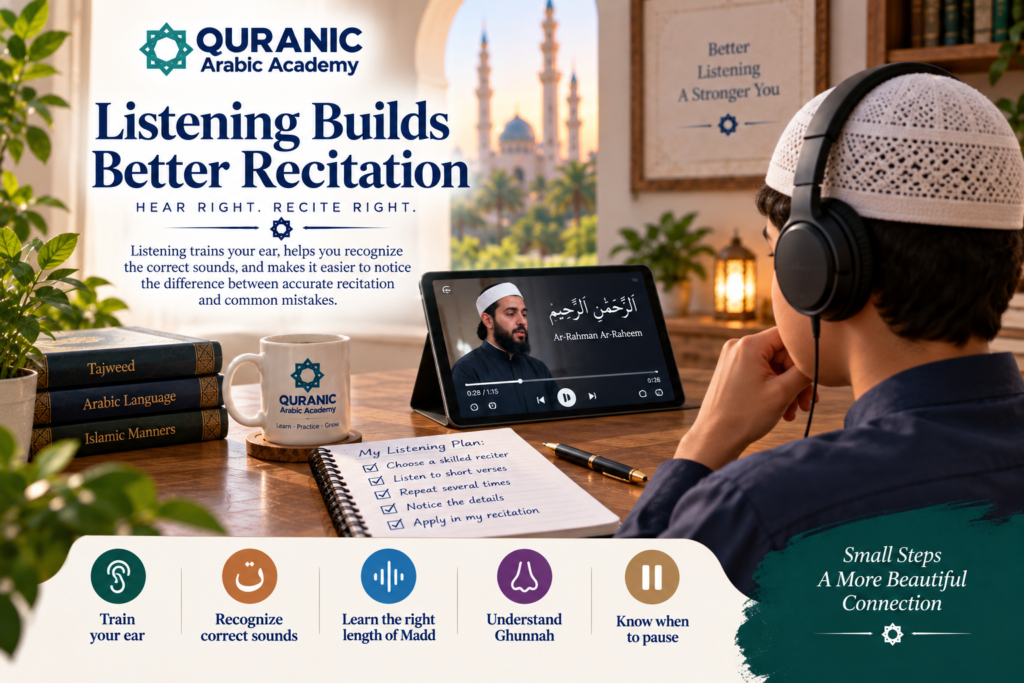
Along the way, you will also find guidance on Quranic reflection (tadabbur) and the foundational values the Quran teaches, which can help you understand the Quran on a deeper level as you apply these steps.
1. Reflect on the Meaning Behind Every Verse (Tadabbur)
Tadabbur means reflecting deeply on the meaning and guidance of the Quran rather than simply moving from one verse to the next. When you pause after an ayah and consider what Allah is teaching, commanding, warning about, or promising, Quran reading becomes more attentive and purposeful.
This reflection can also increase khushu’, strengthen your connection with the verses, and help you remember their lessons beyond the time you spend reciting.
You do not need advanced knowledge of Arabic or Tafsir to begin developing this habit. Start with a reliable translation or short Tafsir, then ask simple questions: What is the main message of this verse? What does it teach me about Allah? Is there a command, warning, promise, or lesson I should apply? Even a few minutes of reflection can transform passive reading into a more meaningful engagement with the Quran.
Allah highlights the purpose of reflecting on His verses:
كِتَابٌ أَنزَلْنَاهُ إِلَيْكَ مُبَارَكٌ لِّيَدَّبَّرُوا آيَاتِهِ وَلِيَتَذَكَّرَ أُولُو الْأَلْبَابِ
“[This is] a blessed Book which We have revealed to you, [O Muhammad], that they might reflect upon its verses and that those of understanding would be reminded.”
For a deeper look at how to practice reflective reading, our guide on Quranic reflections offers practical tadabbur techniques you can start using today.
2. Learn the Story Behind Each Revelation
Some Quranic verses and passages were revealed in connection with particular events, questions, challenges, or circumstances experienced during the time of the Prophet Muhammad ﷺ. Learning the Asbab al-Nuzul (reasons or occasions of revelation) where they are authentically established can give important context to these verses.
Instead of encountering a passage without knowing its background, you begin to understand who was being addressed, what was happening at the time, and why particular guidance was revealed.
This historical context can make Quran reading more engaging while also supporting more accurate understanding. Knowing the circumstances surrounding a verse may clarify why certain words or expressions were used, what issue the verse was responding to, and how it connects with the verses before and after it. It can also help prevent verses from being interpreted in isolation from their original context.
A short, reliable Tafsir will often mention the circumstances of revelation when they are relevant and supported by trustworthy reports. As you read, take a few minutes to explore this background rather than relying on unverified stories or assumptions.
Combining the verse itself with reliable Tafsir and authentic Asbab al-Nuzul can help you appreciate both its historical setting and the broader guidance and lessons it offers.
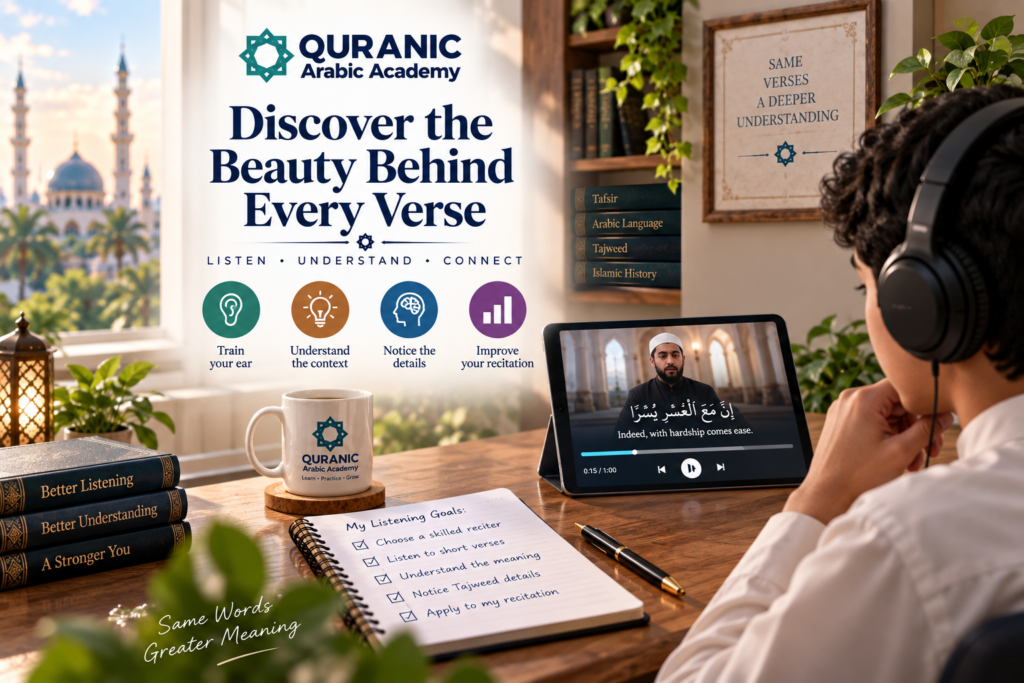
3. Use a Simplified Tafsir Alongside the Quran
Keeping a concise and reliable Tafsir nearby can make Quran reading more engaging and meaningful, especially when you encounter unfamiliar words, expressions, historical references, or ideas that are difficult to understand from translation alone.
Instead of passing over a verse because its message is unclear, pause for a moment, read a brief explanation, and then return to the ayah with a better understanding of what it is communicating.
A simplified Tafsir can also provide useful context without overwhelming you with advanced scholarly discussions. It may explain the general meaning of a passage, clarify important vocabulary, identify who is being addressed, or show how one verse connects with those around it. This makes it easier to read the Quran as a connected message rather than treating every ayah as an isolated statement.
Over time, this habit can strengthen your understanding of important Islamic concepts and recurring Quranic themes, such as Tawheed, mercy, justice, patience, gratitude, repentance, and accountability.
You may also begin to notice how teachings introduced in one Surah are developed or reinforced elsewhere in the Quran, giving you a broader understanding of its guidance and values. such as those discussed in our article on eight foundational values of the Quran.
You do not need to read several pages of Tafsir after every verse. Even a short explanation of an unclear ayah can be enough to remove confusion and encourage deeper reflection.
The goal is to make Tafsir a natural companion to your Quran reading, helping you move gradually from simply reciting the words toward understanding, reflecting on, and applying their guidance.

| Deepen Your Connection With the QuranLearn to read, understand, and reflect on the Quran in its original Arabic with qualified teachers.Book Your Free Trial |
See It in Action:
Wondering what our interactive sessions look like? Click below to peek inside a live session and watch how our expert instructors make learning Quranic Arabic accessible and engaging.
Ready to Begin Your Quranic Journey?
Start learning with professional instructors through our structured curriculum.
Book Your Free Trial4. Personalize Every Verse You Read
As you read, ask yourself a simple question: what is this verse teaching me today? Think about how its message connects to your current choices, habits, relationships, responsibilities, or challenges.
This does not mean changing the original meaning of the verse to fit your situation. Rather, it means understanding the verse correctly and then considering what guidance, reminder, or lesson you can take from it.
A verse about patience may remind you to respond calmly to a difficult situation, while a verse about gratitude may encourage you to recognize blessings you usually overlook.
Verses about forgiveness can make you reconsider how you deal with others, while verses about accountability may encourage you to examine your actions and priorities more carefully.
This kind of personal reflection turns Quran reading from simply moving through the pages into an active experience of guidance and self-examination. Instead of treating the verses as words connected only to people and events of the past, you begin looking for the timeless lessons Allah wants believers to understand and apply.
Pausing for even a few moments after an important ayah can help you carry its message with you long after you close the Mushaf.
Allah encourages believers to reflect deeply on the Quran:
أَفَلَا يَتَدَبَّرُونَ الْقُرْآنَ أَمْ عَلَىٰ قُلُوبٍ أَقْفَالُهَا
“Then do they not reflect upon the Qur’an, or are there locks upon [their] hearts?”

5. Listen to Different Reciters and Recitation Styles
Listening to different Quran reciters can renew your attention when familiar Surahs begin to feel repetitive. Each skilled reciter has a distinctive voice, pace, rhythm, and style of delivery, so hearing the same passage from several reciters can help you notice details you may have overlooked before.
A slow, contemplative recitation may be ideal for quiet reflection, while a slightly faster, flowing recitation may fit naturally into a busy morning or daily listening routine.
You can also explore differences in maqamat (melodic styles), while remembering that beautiful delivery should always remain secondary to correct pronunciation and Tajweed.
Listening carefully can strengthen your ear for Makharij, Madd, Ghunnah, pauses, and changes in pacing, making it easier to recognize and reproduce accurate recitation yourself.
At the same time, avoid focusing only on melody. The Quran teaches believers to recite with Tarteel a measured, deliberate manner of recitation that allows the letters and words to be pronounced clearly rather than rushed. Listening to skilled reciters provides practical examples of what controlled and attentive Quran reading can sound like.
وَرَتِّلِ الْقُرْآنَ تَرْتِيلًا
“…and recite the Qur’an with measured recitation.”
6. Change Your Reading Environment Regularly
Reading in exactly the same spot every day can sometimes make Quran time feel repetitive, especially when you already spend much of your day in that environment. Occasionally changing your surroundings can refresh your attention and help you approach your recitation with greater focus.
- Try reading on a quiet balcony, in a peaceful garden, or in a calm corner of the mosque between the adhan and iqamah. Wherever you choose, aim for a clean, comfortable, and distraction-free setting.
- Turning off the television, radio, and unnecessary phone notifications can make it much easier to concentrate on the words and meanings of the Quran rather than constantly shifting your attention.
You can explore our full range of programs on the homepage of The Quranic Arabic Academy or read more about our courses.
7. Read During the Quiet Hours Before Fajr
The quiet hours before Fajr can be especially suitable for Quran reading because there are usually fewer interruptions, responsibilities, and distractions competing for your attention.
When everything around you is still, it can become easier to slow down, concentrate on each ayah, and spend a little more time reflecting on its meaning.
Even a single page read carefully and attentively may be more beneficial than several pages rushed through while your mind is elsewhere. However, you do not have to force yourself into an early-morning routine if it does not fit your circumstances.
Choose any consistent period when you are mentally alert and your surroundings are quiet, so Quran reading becomes something you can maintain rather than an exhausting obligation.
Read also: How to Progress in Your Quran Reading Journey: A Step-by-Step Guide

8. Follow Thematic Reading Instead of Random Pages
Instead of always reading in strict page order, occasionally choose a specific theme and follow it through different parts of the Quran. You might explore verses about patience, gratitude, repentance, mercy, the Hereafter, stories of the prophets, family relationships, or signs of Allah in the natural world.
This approach keeps your curiosity active because you are not simply moving from one page to the next, you are actively looking for connections and noticing how the Quran discusses the same subject in different contexts.
Thematic reading can also help you develop a broader understanding of Quranic teachings. For example, studying several verses about Sabr (patience) may show you how patience relates to hardship, worship, trust in Allah, and perseverance.
Likewise, following the stories of a particular prophet across different Surahs can reveal different lessons and details that may not be obvious when each passage is read separately.
This method pairs well with a highlighted or color-coded Mushaf, where verses about stories, rulings, supplications, promises, warnings, or other themes are marked in different colors. You can also keep a small notebook to record related ayahs and brief reflections.
Over time, this creates a personal map of recurring Quranic themes and helps you see more clearly how different passages connect to one another.
Read also :Avoid These Common Quran Reading Errors: A Guide to Correcting Your Recitation
9. Set Flexible Reading Goals, Not Rigid Quotas
Committing to a fixed number of pages every day can provide structure and help you remain consistent, but your Quran routine should not become a race to complete a quota. Forcing yourself through a full portion when you are tired, distracted, or struggling to concentrate can turn reading into a mechanical task.
On some days, one page read slowly with attention, understanding, and reflection may be more beneficial for your learning than several pages rushed simply to reach a target.
Instead of measuring every session only by page count, set flexible goals based on both consistency and quality. You might read several pages when you have enough time and concentration, while choosing a shorter passage on a particularly busy day.
This flexibility makes it easier to maintain a long-term Quran habit without feeling that missing a daily target means you have failed.
If a particular verse or group of verses catches your attention, give yourself permission to stay with it. Read it again, listen to its recitation, check its meaning in a reliable Tafsir, and think about why it affected you.
Repeating meaningful verses can deepen reflection while naturally strengthening familiarity with their words, pronunciation, and structure.
Over time, this kind of thoughtful repetition may also make memorization easier, even when memorization was not your original goal. The aim is to create a Quran reading routine that encourages you to return consistently with attention and interest, rather than one that makes you feel pressured to finish a predetermined number of pages every day.
If you would like structured support in building these habits, Quranic Arabic Academy’s adult Quranic Arabic classes are designed specifically for learners who want to understand the Quran directly in Arabic, at a manageable pace.

10. Study the Quran With a Friend or Group
Studying the Quran does not always have to be a solitary activity. Agree with a friend, family member, or small study group to read the same Surah or passage, then meet regularly to discuss the meanings, lessons, rulings, or interesting details each person noticed.
This kind of Mudarasa (mutual study) can keep you accountable while making Quran reading more interactive and engaging.
Group discussion can also reveal points you might have overlooked when reading alone. One person may notice a repeated word, another may find an important explanation in a reliable Tafsir, while someone else may connect the passage to another verse or a practical lesson.
Sharing these observations encourages everyone to read more attentively and return to the text with new questions and greater curiosity.
Community learning is also central to how Quranic education has traditionally been practiced, with learners benefiting from recitation, discussion, explanation, and correction alongside teachers and fellow students.
Even a simple weekly Quran session with one friend can provide motivation and consistency. Just make sure that questions involving Tafsir, Islamic rulings, or difficult interpretations are referred to reliable scholarly sources or qualified teachers rather than answered through personal opinion alone. Learners based in North America may find it helpful to join structured Quranic Arabic classes in Canada that combine language learning with guided group study.
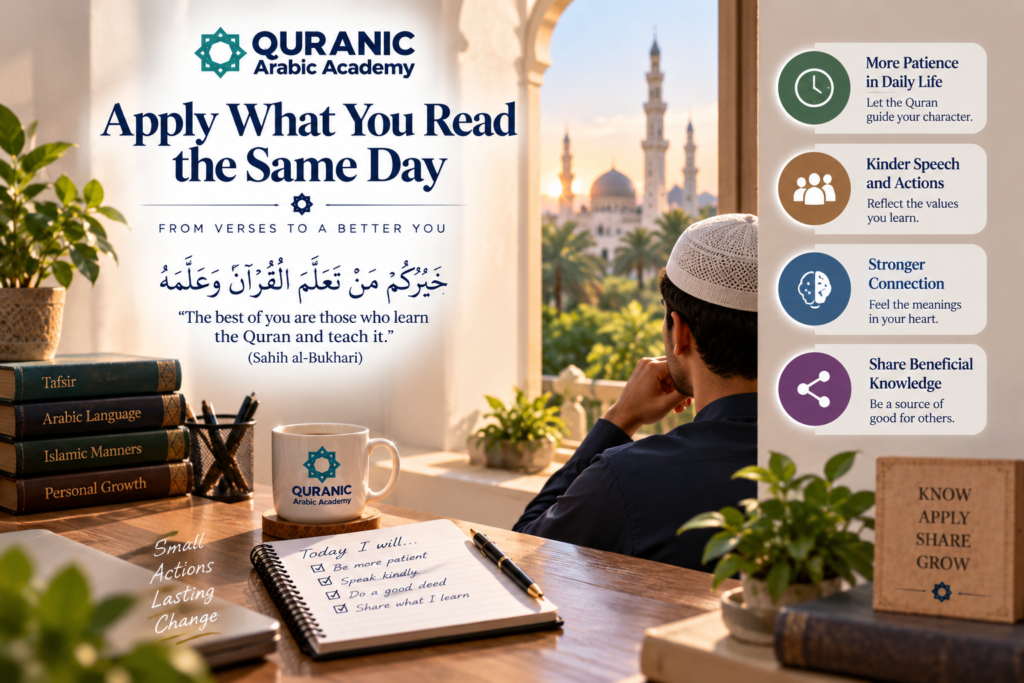
11. Apply What You Read the Same Day
Try turning something you read in the Quran into one small action that you can practice that same day. If you read about patience, consciously control your reaction when something frustrates you.
If you read about kindness or good speech, make an extra effort to speak gently to your family, colleagues, or anyone you meet. Immediate application helps connect Quran reading with everyday behavior instead of leaving its lessons on the page.
Over time, this habit can also make verses easier to remember because you begin associating their meanings with real situations and actions from your own life. Learning should ultimately lead to practice and, when possible, to sharing beneficial knowledge with others.
خَيْرُكُمْ مَنْ تَعَلَّمَ الْقُرْآنَ وَعَلَّمَهُ
“The best among you (Muslims) are those who learn the Qur’an and teach it.”
12. Prepare Yourself Spiritually and Physically Before Reading
Before you begin, remind yourself of the greatness of what you are about to recite: the speech of Allah. Approaching the Quran with this awareness can change an ordinary reading session into a more attentive act of worship.
Try to remove distractions, choose a calm place, and renew your intention so that your goal is not simply to finish pages, but to recite carefully, understand the message, and benefit from its guidance.
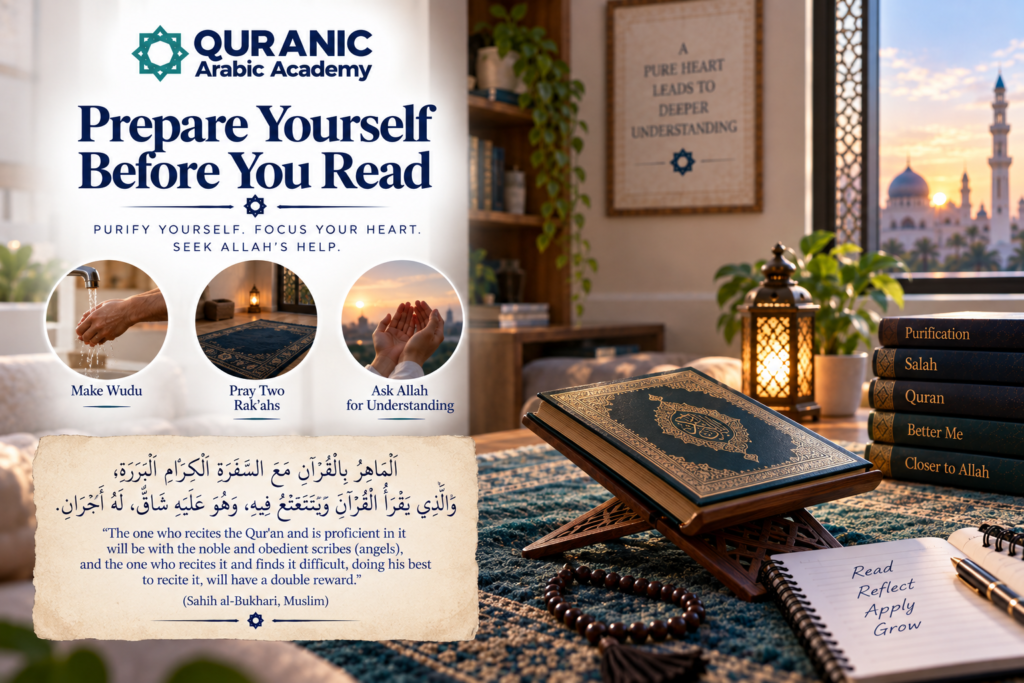
Prepare yourself physically as well as spiritually. Make wudu, and if possible, pray two short voluntary rak’ahs beforehand to settle your mind and turn your attention toward Allah.
You can also make a simple dua asking Allah to open your heart to the Quran, help you understand its meanings, improve your recitation, and give you the ability to put what you learn into practice.
Do not become discouraged if reading is still difficult or your recitation is not yet fluent. Progress takes patience, and struggling sincerely with the Quran is itself recognized in the Sunnah. The Prophet ﷺ said:
«الْمَاهِرُ بِالْقُرْآنِ مَعَ السَّفَرَةِ الْكِرَامِ الْبَرَرَةِ، وَالَّذِي يَقْرَأُ الْقُرْآنَ وَيَتَتَعْتَعُ فِيهِ، وَهُوَ عَلَيْهِ شَاقٌّ، لَهُ أَجْرَانِ».
“The one who recites the Qur’an and is proficient in it will be with the honorable and obedient scribes (angels), and the one who recites it and finds it difficult, doing his best to recite it in the best way possible, will have a double reward.”
If you are just starting your journey with the Arabic of the Quran, our guide on learning Quranic Arabic for complete beginners walks through the first practical steps.
Experience Our Teaching Style:
We believe in clarity and engagement. Watch these short highlights from our actual classes to see our teachers’ methodology and student interactions in real-time.
Ready to Begin Your Quranic Journey?
Start learning with professional instructors through our structured curriculum.
Book Your Free TrialStart Learning to Read the Quran with The Quranic Arabic Academy
If you’re ready to move from reading about the steps to actually practicing them, a qualified teacher makes the biggest difference. Quranic Arabic Academy offers one-to-one online classes designed specifically for adult beginners, at a pace that fits your schedule.
Book your free trial today and take your first guided lesson toward reading the Quran with confidence.

| Learn to Read the Quran With UnderstandingJoin Quranic Arabic Academy’s live online classes and learn directly from qualified teachers, at a pace that fits your life.Start Your Free Trial |
Our Arabic Courses
- Quranic Arabic Classes
- Quranic Arabic Course for Beginners
- Online Quranic Arabic Courses for Advanced Learners
- Quranic Arabic Grammar Course
- Arabic Courses for Understanding the Quran
- Quranic Arabic Course for Sisters (Female)
- Quranic Arabic Course for Kids
- Online Quranic Arabic Classes for Adults
- Quranic Arabic Course UK
- Quranic Arabic Course London
- Quranic Arabic Course USA
- Quranic Arabic Course Canada
- Quranic Arabic Course Australia
- Quranic Arabic Course UAE
- Quranic Arabic Course Germany
Conclusion
Making Quran reading more interesting is less about finding a single trick and more about combining reflection, understanding, personal application, and consistency.
Reflecting on the meaning of verses, learning their context through reliable Tafsir, listening to different skilled reciters, and exploring Quranic themes can keep your reading engaging while helping you develop a deeper connection with the Quran.
The key is to move beyond simply finishing pages. A verse about patience can influence how you respond to hardship, while a verse about gratitude may encourage you to recognize blessings you normally overlook.
Repeating meaningful verses, discussing them with others, and thinking about how to apply their guidance can turn daily recitation into a more active and personal experience.
These habits also connect naturally to Quranic tarbiyah (spiritual upbringing), where consistent and reflective engagement with the Quran gradually shapes your thoughts, choices, habits, and character.
Frequently Asked Questions
How can I stay consistent with reading the Quran daily?
Consistency improves when goals are flexible rather than rigid. Reading one page with focus and reflection, at a fixed quiet time each day, is more sustainable than forcing a large, fixed quota every day.
Does understanding Arabic make Quran reading more enjoyable?
Yes. Understanding even basic Quranic Arabic vocabulary allows you to notice meaning directly in the text, rather than relying only on translation, which many readers find more engaging over time.
Is it necessary to read the Quran in a specific order?
No. While many people read in the traditional order (Surah to Surah), thematic reading, where you follow a specific topic across different surahs, is also a valid and often more engaging approach.
What is tadabbur and why is it important?
Tadabbur is the practice of reflecting deeply on the meaning of Quranic verses rather than reciting them without thought. It is important because the Quran itself was revealed, in part, so that people would reflect on its verses.
Can listening to the Quran recitation replace reading it myself?
Listening is a valuable complement to personal reading and can improve pronunciation and emotional connection, but it does not replace the personal focus and reflection gained from reading the Quran yourself.
Related Articles
Quran







Leave a Reply