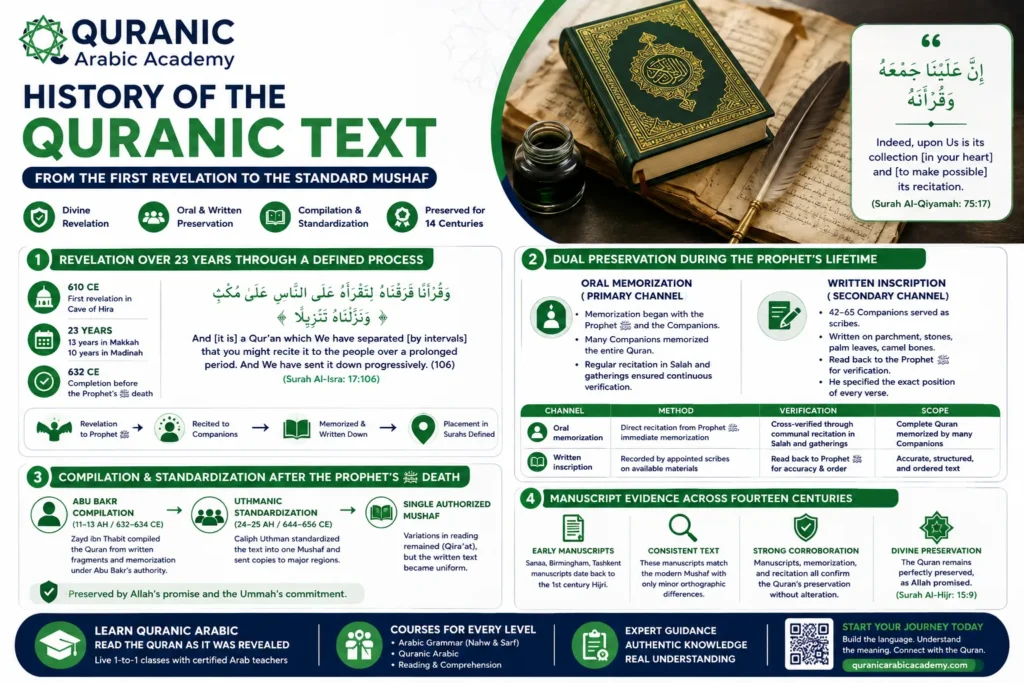
 Quran
Quran

Learning to read Quran for adults is entirely possible at any age, and thousands of adult learners have successfully mastered Quranic reading through structured guidance and steady practice.
Whether you are a new Muslim, someone who grew up without formal Quran lessons, or you simply want to strengthen your recitation, this guide lays out the practical path forward.
This article explains how to learn to read the Quran for adults step by step starting with the Arabic alphabet, moving through correct pronunciation, and applying basic tajweed rules.
You will also find guidance on common obstacles adult learners face and how to choose the right kind of instruction.
By the end of this guide, you will have a clear, realistic roadmap for learning to read the Quran for adults, along with practical tips used by successful learners around the world.
1. Learn the Arabic Alphabet and Letter Forms
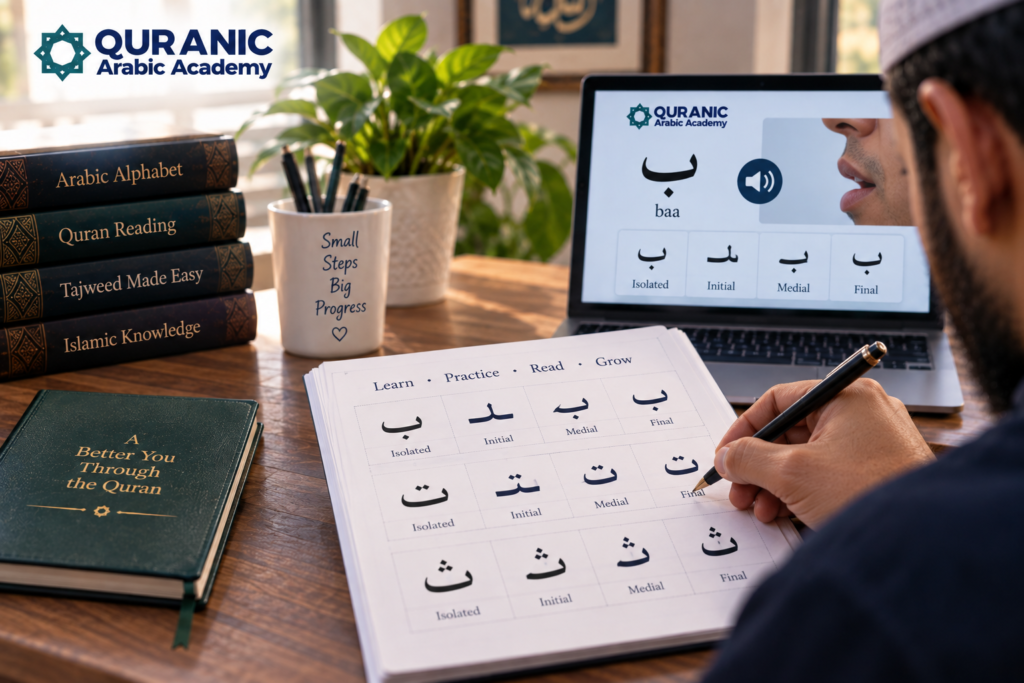
Start by learning the 28 Arabic letters, their individual sounds, and how their shapes change depending on where they appear in a word. Unlike English letters, many Arabic letters have different forms when they appear at the beginning, middle, or end of a word, as well as when written separately.
Becoming familiar with these variations is especially important for adult beginners because recognizing a letter on its own does not always mean it will be immediately recognizable when connected to other letters.
At this stage, learners should practice identifying each letter in its different forms while connecting its written shape with the correct sound. It is also helpful to pay attention to letters that look similar but are distinguished by the number or position of their dots, such as ب، ت، and ث.
Regular practice with individual letters, simple combinations, and short Arabic words gradually strengthens visual recognition and makes connected text easier to read.
Building confidence with the alphabet first creates an essential foundation for progressing to Quranic words, diacritics, correct pronunciation, and eventually fluent Quran recitation.
2. Learn Correct Pronunciation (Makharij al-Huruf)
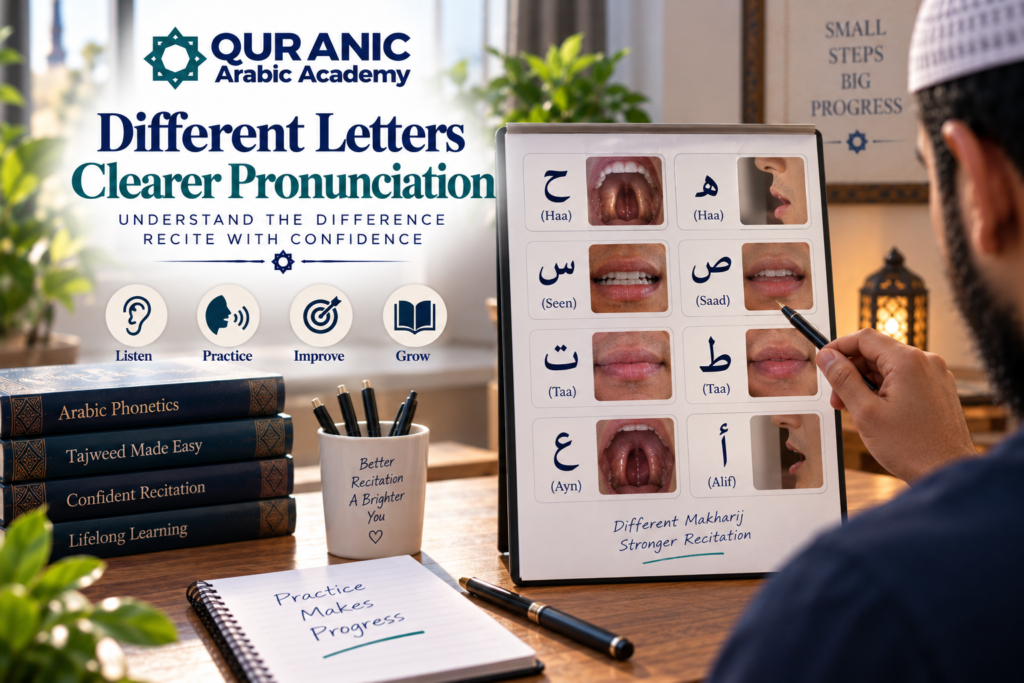
Makharij al-Huruf refers to the precise articulation points in the mouth, throat, tongue, lips, and nasal passage from which Arabic letters and their sounds are produced.
Learning these articulation points is an important part of Quran reading because some Arabic letters may sound very similar to beginners even though they are produced from different places.
For example, learners may initially struggle to distinguish between ح and ه, س and ص, ت and ط, or ع and أ. Understanding where each letter originates helps the learner pronounce these sounds more clearly and recognize the differences when listening to Quran recitation.
Correct pronunciation should be developed as early as possible because repeatedly producing a letter incorrectly can turn the mistake into a habit that becomes harder to correct later.
Adult learners can begin by practicing one letter at a time, paying attention to the position and movement of the tongue, lips, and throat, before using the letter in simple words and Quranic examples.
Listening to a skilled reciter can also help train the ear, but listening alone may not reveal whether the learner is producing the sound correctly.
This is why direct feedback from a qualified Quran teacher is particularly valuable when studying Makharij al-Huruf. A teacher can hear subtle pronunciation errors, demonstrate the correct articulation, and guide the learner in adjusting the mouth or tongue position when necessary.
With slow repetition and regular correction, unfamiliar Arabic sounds gradually become easier to pronounce, creating a stronger foundation for accurate Quran reading and Tajweed.
3. Learn Basic Tajweed Rules
Tajweed is the set of rules that helps learners recite the Quran accurately while giving each Arabic letter its correct pronunciation, articulation, and characteristics.
Once adult beginners become comfortable recognizing letters and reading basic words, they can gradually begin learning essential Tajweed rules that commonly appear throughout the Quran.
These include elongation (madd), nasalization (ghunnah), Noon Sakinah and Tanween, Meem Sakinah, Qalqalah, and proper stopping and starting (waqf and ibtida’). Understanding these rules helps learners know when a sound should be extended, merged, concealed, pronounced clearly, or given a nasal quality.
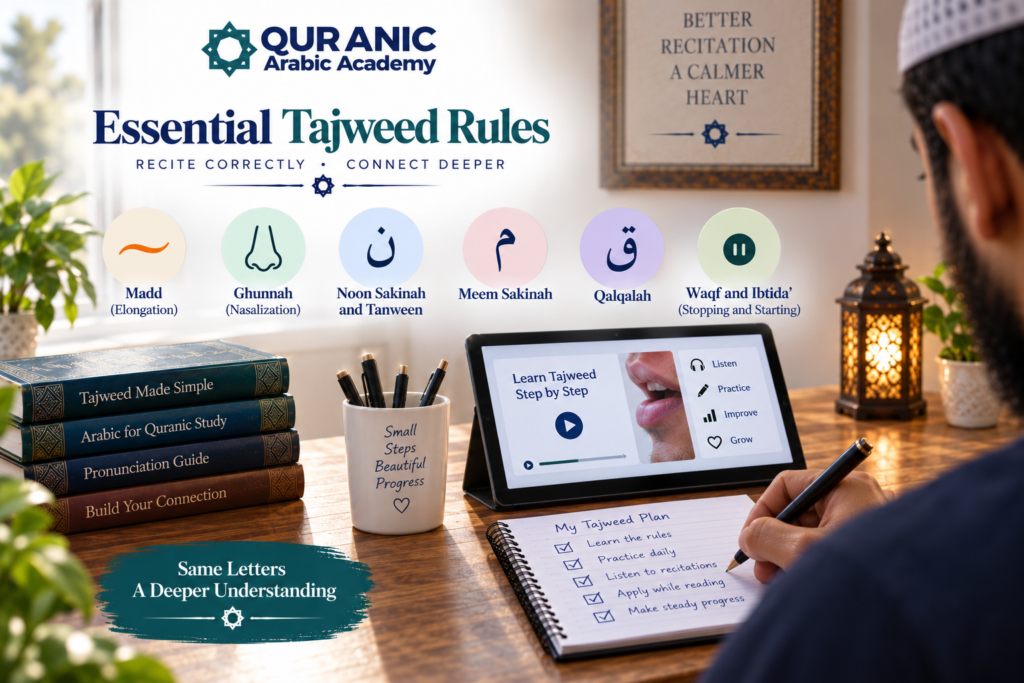
Adult learners do not need to memorize an entire Tajweed rulebook before they begin reciting. A more practical approach is to learn one rule at a time, see it in real Quranic examples, and practice applying it while reading aloud.
Repeated exposure helps learners move from consciously thinking about each rule to applying it more naturally during recitation.
Practicing with a qualified teacher is particularly useful at this stage, as the teacher can identify incorrect applications, demonstrate the correct sound, and help the learner develop greater accuracy, fluency, and confidence over time.
See It in Action:
Wondering what our interactive sessions look like? Click below to peek inside a live session and watch how our expert instructors make learning Quranic Arabic accessible and engaging.
Ready to Begin Your Quranic Journey?
Start learning with professional instructors through our structured curriculum.
Book Your Free Trial4. Practice with a Qualified Teacher
The Quran has traditionally been learned through talaqqi, or direct oral learning from a qualified teacher who listens carefully to the student’s recitation. This approach is especially valuable for adult beginners because pronunciation and Tajweed mistakes are not always easy to recognize through self-study.
A teacher can hear subtle errors in Makharij, letter qualities, elongation, Ghunnah, and stopping, then provide immediate correction and demonstrate the correct pronunciation.
Books, videos, and apps can support daily practice, but they cannot always replace personalized feedback from an experienced instructor. Regular teacher-led sessions also give adult learners a clear learning path and help them focus on the areas that need the most improvement.
Structured programs such as Quranic Arabic classes for adults at Quranic Arabic Academy are built around this guided approach, helping adult beginners develop their Quran reading skills gradually with direct instruction and consistent practice.
5. Listen Daily to Skilled Reciters
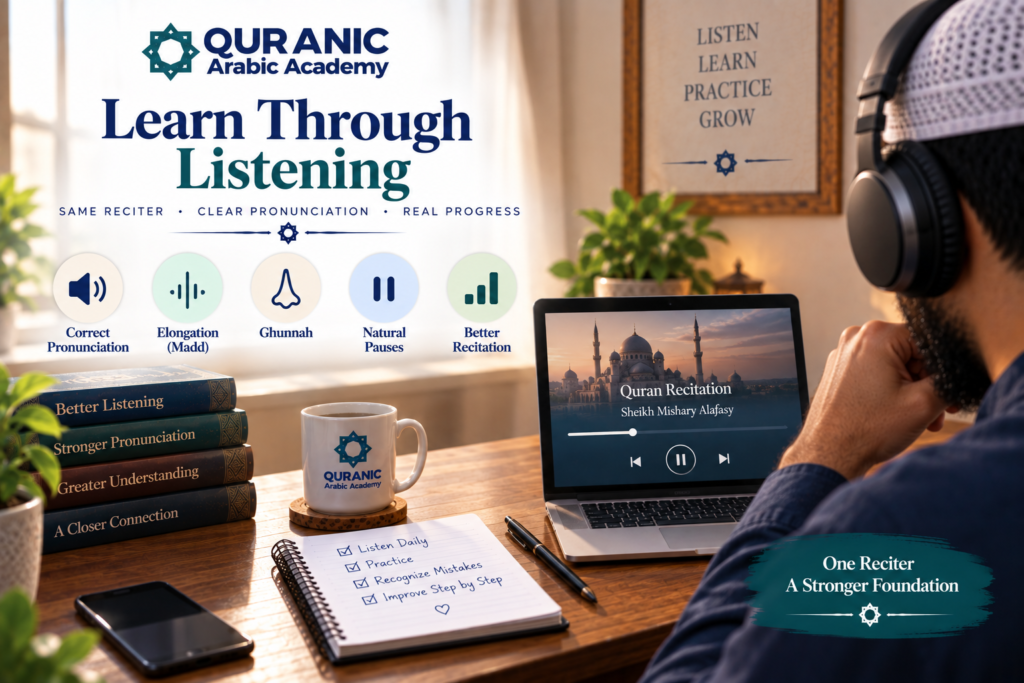
Listening regularly to a skilled Quran reciter known for accurate Tajweed is one of the most useful ways to train your ear. Daily listening helps adult learners become more familiar with correct letter pronunciation, elongation, Ghunnah, pauses, and the natural rhythm of Quranic recitation.
Over time, hearing these sounds repeatedly can make it easier to recognize mistakes in your own reading and reproduce the correct pronunciation during practice.
Many teachers recommend listening to one reciter consistently at the beginning, rather than frequently switching between different reciters and recitation styles, so the learner can become familiar with one clear model.
Listening works best when it is combined with active practice rather than treated as a passive activity. Learners can listen to a short verse, pause the recording, repeat it aloud, and then compare their recitation with the original.
Repeating difficult words or verses several times can gradually strengthen pronunciation, fluency, and confidence.
Common Challenges Adults Face When Learning to Read the Quran
Most adult learners encounter a few common challenges when they begin learning to read the Quran, particularly if they have little or no previous experience with Arabic.
These may include limited study time, difficulty recognizing connected Arabic letters, unfamiliar pronunciation, confusion with Tajweed rules, or frustration when progress feels slower than expected.
Balancing Quran study with work, family, and other responsibilities can also make it difficult to maintain a consistent routine.
Some learners may feel nervous about making mistakes when reading aloud or struggle to distinguish between Arabic letters that sound similar. Others may understand a rule in theory but find it difficult to apply naturally while reciting.
Recognizing these challenges in advance makes them easier to address through regular practice, realistic goals, patient repetition, and guidance from a qualified teacher. With time and consistency, skills that initially feel difficult can gradually become more familiar and natural.
1. Finding Time for Quran Study With a Busy Schedule
Balancing work, family responsibilities, and other daily commitments is one of the most common challenges adult Quran learners face. A busy schedule can make it difficult to find long periods for study, but meaningful progress does not require hours of practice every day.
Setting aside a short, fixed period of fifteen to twenty minutes for reading, pronunciation, or Tajweed practice is often easier to maintain than occasional long sessions. Choosing a consistent time, such as after Fajr, before work, or in the evening, can also help turn Quran learning into a regular habit.
Over time, these short but focused sessions can build stronger reading skills and steady progress.
Read also: Is It Too Late to Learn the Quran? A Comprehensive Guide for Adults

2. Overcoming the Fear of Making Quran Reading Mistakes
Many adults feel self-conscious or nervous about mispronouncing Arabic letters and Quranic words in front of a teacher, especially when they are complete beginners. This fear can sometimes cause learners to read too quietly, hesitate frequently, or avoid practicing aloud altogether.
However, making mistakes is a natural part of developing any new reading and pronunciation skill. Regular practice combined with patient, consistent correction from a qualified teacher helps learners identify weaknesses, correct them gradually, and become more confident in their recitation over time.
Read also: Top Mistakes in Quranic Recitation and How to Perfect Your Reading
3. Pronouncing Unfamiliar Arabic Letters Correctly
Arabic contains several letters and sounds that may have no direct equivalent in a learner’s first language, making them difficult to pronounce correctly at the beginning. Letters produced from deeper areas of the throat or requiring specific tongue positions can take time for adult learners to master.
Studying Makharij al-Huruf (articulation points) helps learners understand exactly where each sound should originate and how the mouth, tongue, or throat should be positioned. Repeating difficult letters individually, practicing them inside Quranic words, and receiving direct feedback from a teacher is generally much more effective than relying on reading or listening alone.
If you would rather learn with structured, one-on-one guidance instead of teaching yourself, Quranic Arabic Academy pairs each of these steps with a qualified teacher who can listen to your recitation and provide direct correction.
You can read more about teaching approach on our about page, or go directly to our adult Quranic Arabic classes to see how lessons are structured for beginners.

What Does the Quran Say About Learning and Reciting It?
The Quran encourages believers to read, learn, remember, and reflect on its message rather than viewing it as something beyond their ability to approach. Allah describes the Quran as having been made easy for remembrance, offering encouragement to learners at every stage.
For adults beginning to read the Quran later in life, this verse can be a powerful reminder that difficulty at the beginning should not become a reason to stop.
Progress may require patience, repetition, and guidance, but consistent effort can gradually make Arabic letters, pronunciation, and recitation feel more familiar.
وَلَقَدْ يَسَّرْنَا الْقُرْآنَ لِلذِّكْرِ فَهَلْ مِن مُّدَّكِرٍ
“And We have certainly made the Qur’an easy for remembrance, so is there anyone who will remember?”
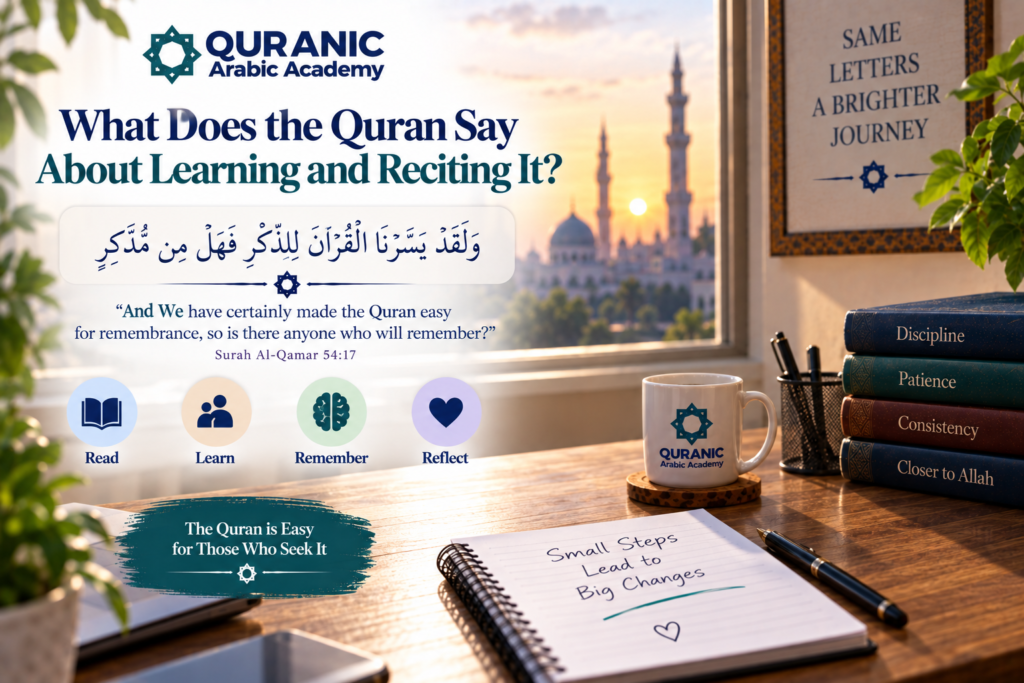
Teachers frequently cite this verse to reassure adult learners that the Quran’s language and structure were revealed in a way that supports learning not reserved for native Arabic speakers or those who start as children.
What Does the Hadith Say About Learning the Quran?
Prophet Muhammad ﷺ placed great importance on both learning the Quran and passing its knowledge on to others. One of the most widely cited hadiths on this subject highlights the virtue of those who dedicate themselves to learning the Quran and then teaching what they have learned.
For adult beginners, this hadith can be a source of encouragement because Quran learning is valuable at every stage, whether someone is learning the Arabic letters for the first time, improving pronunciation, studying Tajweed, or developing greater fluency in recitation.
The goal is to continue learning consistently and, as knowledge grows, to share its benefits with others.
خَيْرُكُمْ مَنْ تَعَلَّمَ الْقُرْآنَ وَعَلَّمَهُ
“The best among you are those who learn the Qur’an and teach it.”
This hadith is often used by Quran teachers to encourage adult students specifically it frames learning to read the Quran, at any age, as something with real merit, not only teaching it to others once mastered.

Practical Tips to Learn Quran Reading Faster as an Adult
Learning to read the Quran as an adult becomes easier when practice is consistent, focused, and built around realistic goals. Rather than trying to improve everything at once, beginners can make faster progress by developing a few simple habits and repeating them regularly.
The following practical habits are commonly recommended by Quran teachers to help adult learners strengthen letter recognition, pronunciation, Tajweed, reading accuracy, and fluency while keeping the learning process manageable alongside work and family responsibilities.
| Tip | Why It Helps |
| Practice daily, even briefly | Short, consistent sessions build muscle memory in the mouth and tongue faster than infrequent long sessions. |
| Use a mushaf with color-coded tajweed | Color-coded rules make it easier to notice and apply tajweed rules while reading, without constantly checking a separate book. |
| Record your own recitation | Listening back to yourself helps you catch pronunciation issues you may not notice while reading in real time. |
| Read aloud, not silently | Reading aloud reinforces correct pronunciation and makes it easier for a teacher to correct you. |
| Review previous lessons regularly | Revisiting earlier letters and rules prevents early progress from fading as you move to new material. |
Choosing Between Online and In-Person Quran Reading Classes
Both online and in-person Quran reading classes can work well for adult learners, and the right choice usually depends on your schedule, access to qualified teachers, and preferred learning style.
Online classes offer greater flexibility and make it possible to study with experienced teachers without being limited by location, which can be particularly useful for adults balancing work and family responsibilities.
In-person lessons, meanwhile, may appeal to learners who prefer face-to-face interaction and a traditional classroom environment.
Whichever format you choose, the most important factors are regular attendance, direct pronunciation correction, structured lessons, and consistent practice between classes.
| Factor | Online Classes | In-Person Classes |
| Flexibility | High — lessons can often fit around work schedules | Lower — tied to a fixed local class time |
| Access to qualified teachers | Wide access regardless of location | Limited to teachers available locally |
| One-on-one correction | Available in most one-to-one online programs | Available, but often in group settings |
Programs such as Quranic Arabic Academy’s adult Quranic Arabic classes are built around one-to-one, online instruction, which is often easier for working adults to sustain than a fixed in-person schedule. Learners who progress past the reading stage can later move into our advanced Quranic Arabic classes.

Once you can read comfortably, many learners want to understand the meaning behind what they are reciting. Quranic Arabic Academy’s Quranic reflections blog explores the meaning and context (tadabbur) of specific verses, and their piece on the closest dialect to Quranic Arabic is a useful next step for learners curious about the language itself.
Learners interested in the history of the text they are reading may also enjoy the academy’s article on early Quranic manuscripts, while those ready to study grammar in more depth can look at their guide to Quranic Arabic prepositions.
See It in Action:
Wondering what our interactive sessions look like? Click below to peek inside a live session and watch how our expert instructors make learning Quranic Arabic accessible and engaging.
Ready to Begin Your Quranic Journey?
Start learning with professional instructors through our structured curriculum.
Book Your Free Trial
Start Learning to Read Quran with Quranic Arabic Academy
If you are ready to begin learning to read the Quran, Quranic Arabic Academy provides structured guidance designed to help adult learners progress from the basics toward more confident and accurate recitation.
With support from qualified teachers, you can work on Arabic letters, Makharij, pronunciation, Tajweed, and reading fluency at a pace that suits your current level and schedule.
Instead of trying to correct mistakes on your own, guided lessons give you direct feedback and a clear path for improvement, whether you are a complete beginner or returning to Quran reading after a long break.

| Learn to Read the Quran with a Qualified TeacherJoin one-to-one online classes built for adult beginners, at a pace that fits your schedule.Book Your Free Trial |
Our Arabic Courses
- Quranic Arabic Classes
- Quranic Arabic Course for Beginners
- Online Quranic Arabic Courses for Advanced Learners
- Quranic Arabic Grammar Course
- Arabic Courses for Understanding the Quran
- Quranic Arabic Course for Sisters (Female)
- Quranic Arabic Course for Kids
- Online Quranic Arabic Classes for Adults
- Quranic Arabic Course UK
- Quranic Arabic Course London
- Quranic Arabic Course USA
- Quranic Arabic Course Canada
- Quranic Arabic Course Australia
- Quranic Arabic Course UAE
- Quranic Arabic Course Germany
Conclusion
Learning to read the Quran for adults is a realistic and achievable goal at any age, especially when the learning process follows a clear and gradual order. Beginners can start by becoming familiar with Arabic letters and their different forms, then focus on correct pronunciation and Makharij al-Huruf before gradually introducing basic Tajweed rules.
Building these skills step by step creates a stronger foundation than trying to read long verses or learn advanced rules too early. Regular practice with a qualified teacher also gives learners the opportunity to receive immediate correction and prevent pronunciation mistakes from becoming habits.
Adults can make steady progress by setting aside a short, consistent period for Quran practice each day, listening regularly to skilled reciters, repeating difficult letters and verses, and accepting correction as a normal part of learning.
Choosing a learning method that fits your schedule and gives you access to reliable pronunciation guidance can help you build confidence gradually and develop a lasting connection with Quran reading.
Frequently Asked Questions
Can adults really learn to read the Quran from scratch?
Yes, adults can learn to read the Quran from scratch, including those with no prior knowledge of Arabic. Progress depends mainly on consistent practice and access to a qualified teacher, not on age.
How long does it take an adult to learn to read the Quran?
The time it takes varies by individual, prior familiarity with Arabic, and how often a learner practices. Adults who study a few times a week with a teacher often become able to read simple verses within several months.
Do I need to learn Arabic grammar before reading the Quran?
No, reading the Quran does not require learning Arabic grammar first. Reading focuses on recognizing letters and applying correct pronunciation, while grammar is typically studied later for those pursuing deeper understanding.
Is it better to learn Quran reading online or in person as an adult?
Neither format is universally better; it depends on the learner’s schedule and access to qualified teachers. Online one-to-one classes often suit working adults, while in-person classes may suit those with a trusted local teacher.
What is the difference between tajweed and simply reading the Quran?
Reading the Quran means pronouncing the Arabic text accurately, while tajweed refers to the specific rules that govern correct recitation, such as elongation and nasalization. Tajweed is typically introduced gradually after basic reading fluency is established.






Leave a Reply